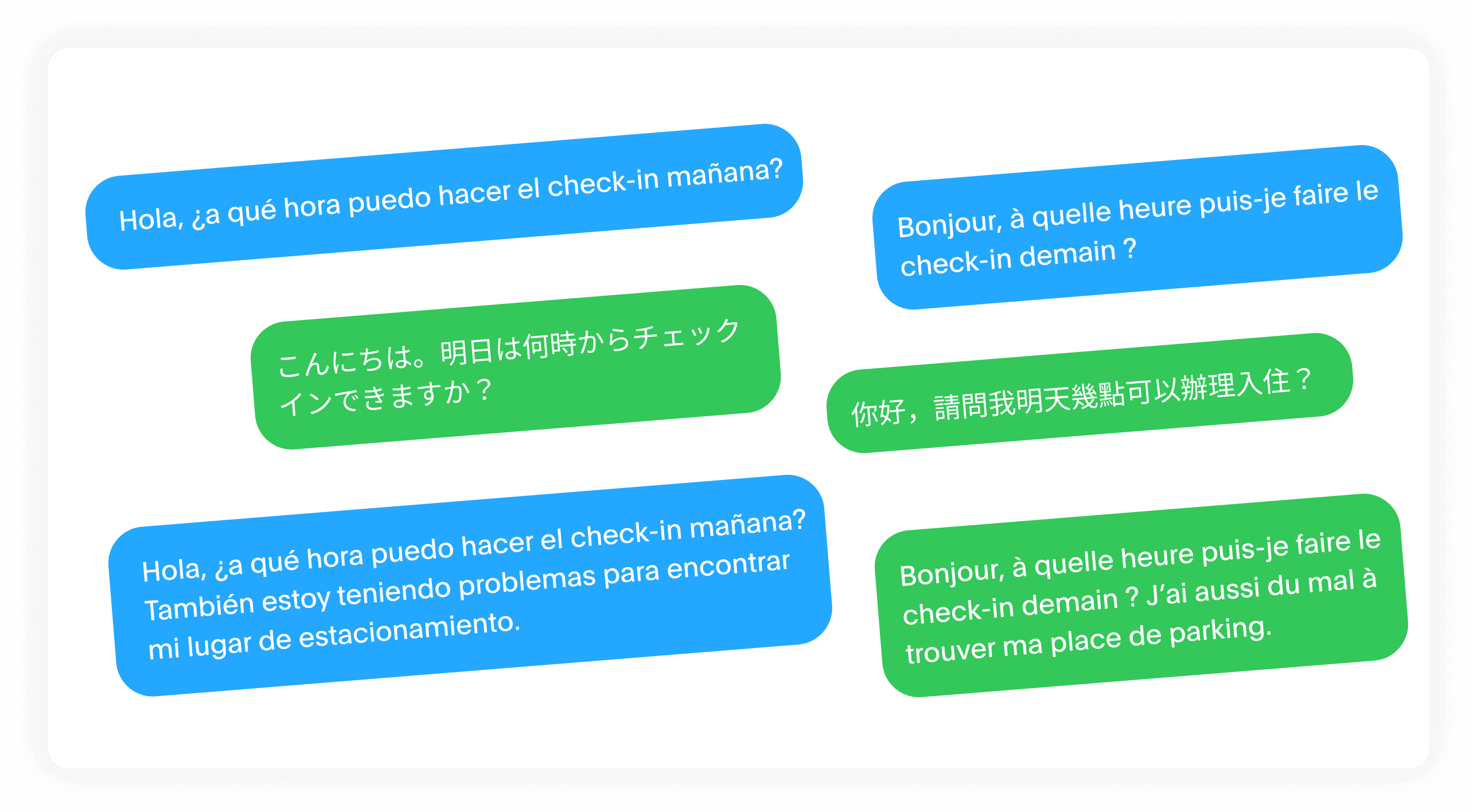
International travel to the United States hit record levels in early 2026. For independent hotels and vacation rentals, that means more guests messaging in languages staff don't speak. Most properties have no plan for it. The ones that do are turning that gap into a competitive advantage.
What happens when language barriers go unmanaged.
A guest books through a European OTA, sends three pre-arrival questions in German, and gets no response. They arrive frustrated and primed to write about "unhelpful staff,” even if your team would have been happy to help in English.
These failures rarely look like failures at the moment. They look like a guest who asked fewer questions and left a three-star review citing "communication issues." The underlying cause, a language gap that was never addressed, goes undiagnosed.
How hotels are closing the gap.
The most practical solution isn't hiring multilingual staff but it's building multilingual communication into the guest messaging layer. AI-powered platforms can detect a guest's preferred language from OTA or PMS data and respond automatically before they even arrive. Pre-arrival messages, check-in instructions, and FAQ responses all go out in the guest's native language, without a staff member touching a translation tool.
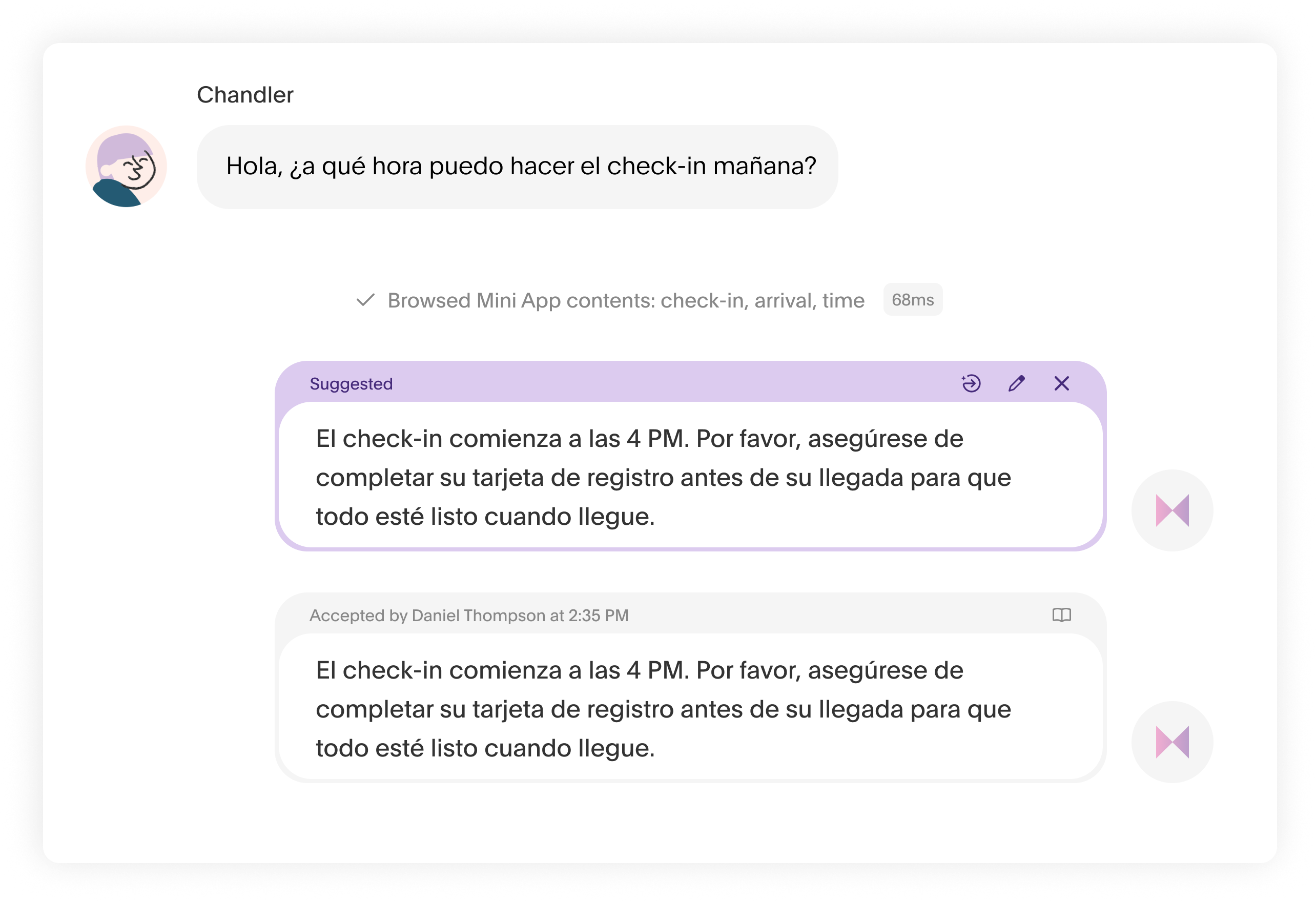
Akia's messaging handles this across OTA inboxes, SMS, web chat, and email. Properties using it have been able to respond to guests in their native language automatically, removing manual burden from staff and eliminating the lag that causes frustration.
What good multilingual guest service actually looks like.
It doesn't require fluency across your team — just consistency at a few high-impact moments:
Pre-arrival - Send check-in instructions and arrival logistics in the guest's language before confusion sets in.
In-stay FAQ responses - Automate answers to common questions like Wi-Fi, checkout, and amenities in the languages your guests actually speak.
OTA inbox management - Respond to foreign-language inquiries in the guest's language. This alone improves pre-stay sentiment and reduces front desk slowdowns at check-in.
Review solicitation - A post-stay message in the guest's own language outperforms a generic English email every time.