Guests message from everywhere now. SMS, WhatsApp, web chat, email, the OTA inbox, and the phone at the front desk. Plenty of software promises to handle all of it, but the tools fall into very different buckets and the labels have gone fuzzy. Some are chatbots. Some are copilots that draft a reply for a human to send. A few are real AI agents that read what a guest needs and handle it start to finish.
This guide sorts the platforms hoteliers are actually shopping for, grouped by what each one is genuinely best at. Before the list, the distinction that decides everything in 2026.
Chatbot, copilot, or agent. Know which one you're buying.
Most "AI guest communication" tools are one of three things, and the gap between them is bigger than the marketing suggests.
- Chatbot. Scripted flows and FAQ deflection. It answers what it was told to answer and hands off the rest. Fast to break the moment a guest phrases things their own way.
- Copilot. Drafts a suggested reply and waits for a staff member to approve and send. Helpful, but a person is still in every loop, so it saves keystrokes, not headcount.
- Agent. Reads the message, understands the reservation, decides what to do, and does it. It books the room, sells the early check-in, answers the pet policy, and takes the payment, then only pulls in a human when it should.
Akia is the agent. That single difference is why we grouped the field the way we did below. Here's what that looks like for a hotel.
The 2026 comparison at a glance.
| Platform | Best for | What it really is | Voice AI |
|---|---|---|---|
| Akia | Autonomous guest communication | Agentic AI agent | Yes, answers and acts on calls |
| Canary Technologies | Upsells and contactless | Guest journey suite | Added recently |
| Medallia Concierge (Zingle) | Enterprise CX teams | Messaging + CX platform | No |
| Duve | Guest apps and upsells | Guest experience platform | No |
| ALICE by Actabl | Concierge and service requests | Operations platform | No |
| Kipsu | Human real-time service | Staffed messaging | No |
What actually matters when you compare them.
A few criteria separate a tool that saves your team real hours from one that just adds another inbox.
- How much does it resolve on its own. The whole point is fewer messages reaching a person. Ask any vendor for the share of conversations closed without staff, not the number of channels they connect. If you're earlier than a vendor conversation, hotel guest communication tips covers the fundamentals first.
- Does it cover the phone too. Messaging is table stakes. The front desk phone is where most tools stop and most guests still call.
- How deep the PMS connection runs. Reading a reservation is the difference between a generic reply and the right one.
- How long it takes to sound like you. Some tools need weeks of scripting. Others learn your property in an afternoon.
The best AI guest communication platforms, by what they're best at.
Akia. Best for hotels that want the work actually done.
Akia is a real AI agent for hospitality. She reads what a guest needs and handles it herself, across every channel a guest might use, and she is the same agent whether the guest texts, opens web chat, or calls.
That last part is the wedge. AI Voice answers the phone, books the room, sells the upgrade, and takes the payment on the call, so it never lands on the front desk. Most tools treat voice as a separate product or a voicemail catcher. For Akia it is the same agent that runs guest messaging, engineered to speak.
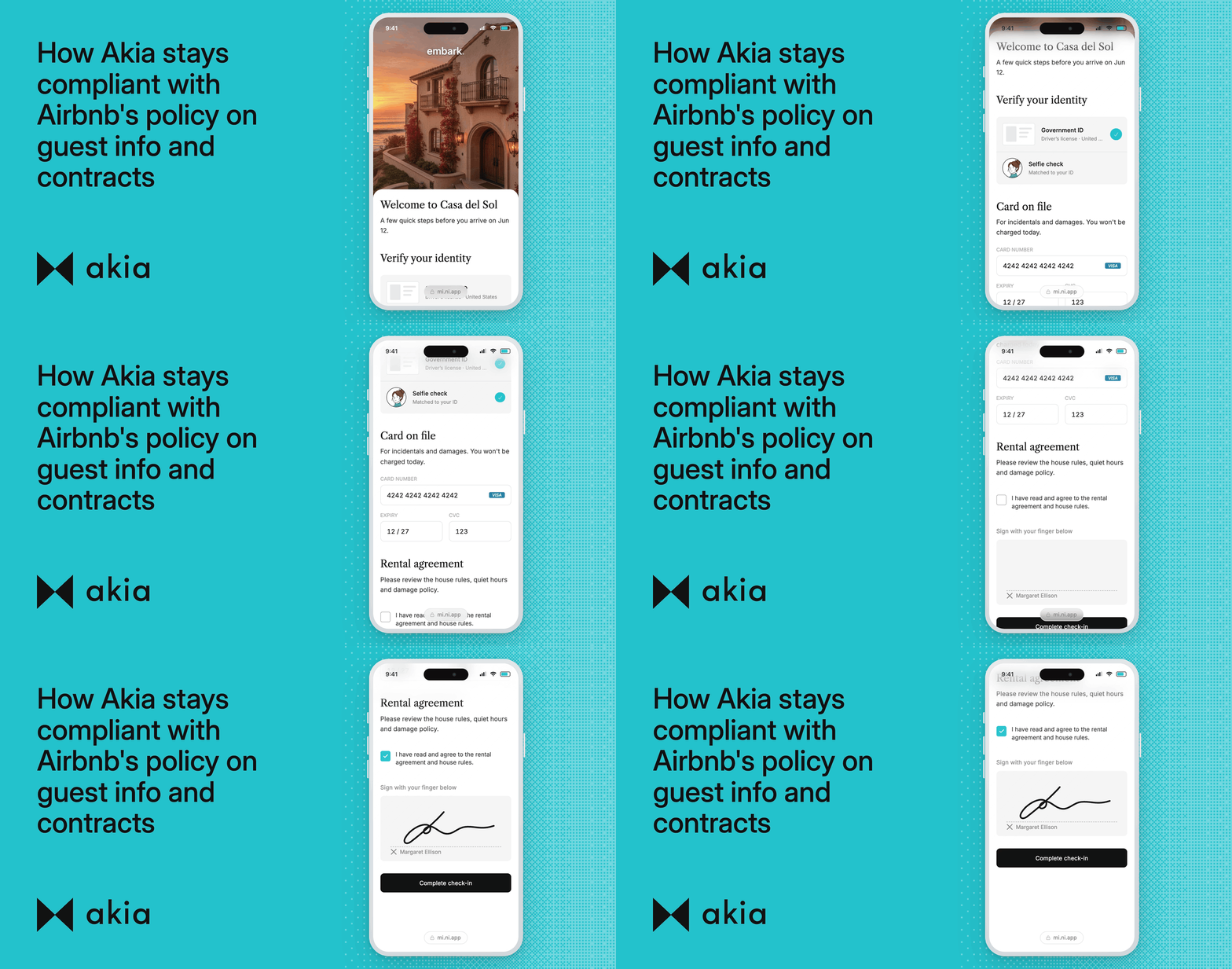
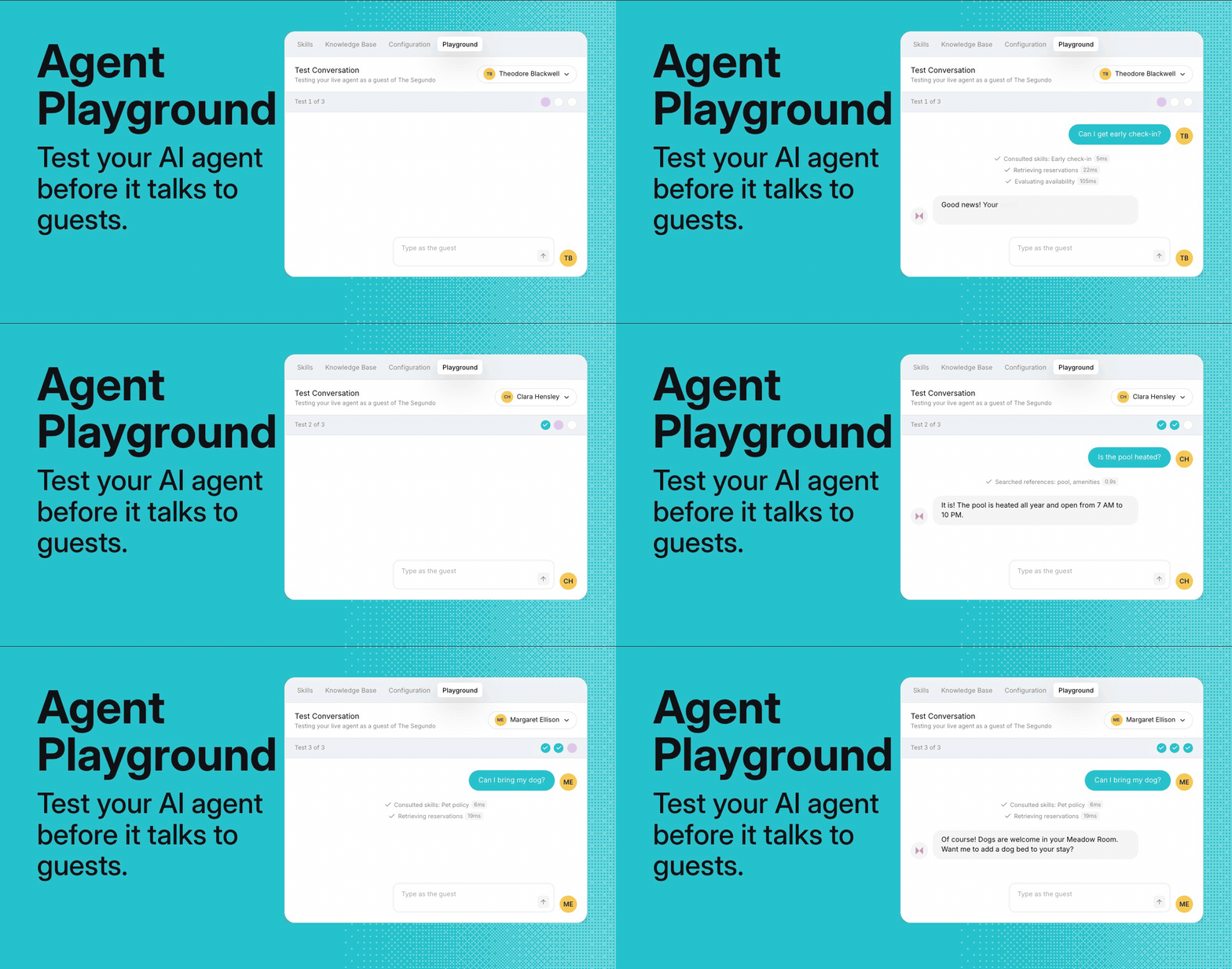
She learns your property fast. Point her at your policies and docs through the Knowledge Base and she answers pool hours and pet questions in your real words. Build Skills for the workflows you run every day, and drop Mini Apps into a text so guests check in, browse the menu, or settle up without a download or a login. She plugs into the major PMS platforms, so every reply already knows the reservation.
Canary Technologies. Best for upsell revenue and contactless flows.
Canary built its name on contactless check-in, digital authorizations, and upsells, and it added AI messaging and a voice product more recently. It is a polished suite with strong revenue tooling, aimed squarely at hotels. If your first goal is capturing upsell revenue and running contactless arrivals, it is a serious option. The AI layer is newer than the operational one, so weigh how much you need the agent to resolve on its own versus assist your team.
Medallia Concierge (formerly Zingle). Best for enterprise CX teams.
Zingle now lives inside Medallia as Medallia Concierge, and it shows. It is a mature, widely deployed messaging platform with deep two-way SMS, WhatsApp, and Messenger, sitting next to Medallia's broader customer experience and survey stack. That makes it a fit for large brands that already run Medallia and want messaging in the same house. It leans toward staff-assisted messaging and analytics rather than an agent that closes conversations by itself.
Duve. Best for guest apps and pre-arrival upsells.
Duve is a guest experience platform strong on the branded guest app, online check-in, and upsell offers before and during the stay. It does a nice job making the guest-facing surface look sharp. Its messaging is more of a supporting layer around the app and journey than an autonomous agent, so pair it mentally with "guest app first, conversation second."
ALICE by Actabl. Best for concierge and service requests.
ALICE, now part of Actabl, is an operations and concierge platform, and hoteliers voted Actabl the top concierge software in the 2026 HotelTechAwards. Its heart is service request management, task routing, and staff coordination, with guest messaging around it. If your priority is running housekeeping, maintenance, and concierge requests cleanly, ALICE is built for that world. Guest-facing AI is not its center of gravity.
Kipsu. Best for human real-time service.
Kipsu is built around real-time messaging handled by your staff, with a service-quality philosophy that favors a human touch over automation. Luxury and service-forward hotels like it for exactly that reason. The trade-off is in the name: it is designed to help people message well, not to hand the conversation to an agent, so it scales with staff rather than instead of them.
Guest messaging by property type
Boutique hotels
A boutique property runs on a small team, and there's often nobody at the desk overnight. Guests still text at 2am. Akia is the fit here because she answers then, and she knows the guest's reservation while she does it.
Resorts
Resorts have more to sell and more to coordinate. A guest asking about spa availability is also a guest who might book dinner. Look for a tool that answers and books in the same conversation, which is what Akia does.
Aparthotels and serviced apartments
Longer stays mean fewer touchpoints and guests who prefer to self-serve. They want the door code and the laundry situation without calling anyone. Akia keeps that in her Knowledge Base and answers on whatever channel they already use.
Vacation rentals and villas
There's no front desk, so the message thread is the property. Guests judge the whole stay on how fast someone replies. Akia covers every channel they book through and flags the ones that need a person.
Urban and business hotels
Short stays and high turnover, with guests landing late off a flight. Most questions are the same twenty, arriving at every hour. Akia takes them so the desk can look after whoever's standing in front of it.
Frequently asked questions.
What is AI guest communication software? It is software that handles the conversations between a hotel and its guests across channels like SMS, WhatsApp, web chat, email, and the phone. The 2026 versions range from scripted chatbots to AI agents that read a guest's message, understand the reservation, and resolve the request on their own.
What is the difference between a hotel chatbot and an AI agent? A chatbot follows scripted flows and deflects anything outside them. An AI agent understands the guest and the reservation, decides what to do, and does it, from answering a policy question to booking a room and taking payment. The agent resolves conversations. The chatbot mostly routes them. For a closer look at the chatbot side, see how hotel chatbots work.
Can AI answer phone calls, not just messages? Some can. Akia answers the phone as the same agent that runs messaging, and can book, upsell, and take payment on the call. Many platforms handle only text channels, and a few added voice recently as a separate layer, so confirm whether voice is a real agent or a voicemail catcher.
Will it connect to my PMS? The stronger platforms integrate with the major property management systems so replies are grounded in the real reservation. If a tool cannot read your PMS, its answers stay generic. Akia connects to the major hotel PMS platforms.
What's the difference between a guest communication platform and a PMS? Your PMS holds the reservation: rates, room assignments, folios. A guest communication platform handles the conversation around it. The two need to talk to each other, which is why the depth of the PMS integration is worth checking closely before you buy.
Do I need a guest communication platform if my PMS already sends emails? Most PMS email is one-way and on a fixed template. It confirms the booking, then goes quiet. A guest communication platform picks up when the guest writes back, on whatever channel they chose. That's where the questions actually arrive.
How much does it cost? Pricing ranges from per-room subscriptions to usage-based plans, and most vendors quote based on your size and channels. The better comparison is value: how many conversations the tool closes without a staff member. Book a demo to see it against your own volume.
Can AI guest messaging software hand off to a human? Yes, and you decide when. Akia Supervision lets you set what Akia handles on her own and what she passes to staff. Anything outside her lane lands in the inbox with the full conversation attached.
Can AI guest messaging software modify a booking? Akia handles stay extensions end to end. A guest asks to stay another night, she quotes the price from live availability and takes the payment in the thread. The charge posts to the folio in your PMS. Whether she can rewrite arrival and departure dates on an existing reservation depends on your PMS integration.
Can AI turn a guest request into a task for staff? Yes. When a guest asks for extra towels, Akia creates the task and routes it to housekeeping. Your team sees the request without anyone retyping it.
Does AI guest messaging software support multiple languages? Akia replies in the language the guest writes in. A guest texting in Portuguese gets Portuguese back, without anyone on your team switching anything on.
See the agent handle it.
The fastest way to tell a chatbot from an agent is to watch one work. Book a demo and see Akia read a real guest message, pull the reservation, and finish the job herself.