TL;DR: We looked at more than 400,000 automated guest messages sent across 36 properties over a year to see which ones guests actually answer. The biggest lever we found wasn't the wording or the timing. It was whether the message came from a name. Messages signed with one pulled about 1.7 times the replies of the same message sent unsigned.
Key takeaways
- Giving your automated messages a name lifted guest replies about 1.7x at the property that tried it, with the same copy at the same moment in the stay.
- Not every message should earn a reply. A booking confirmation is doing its job when it's read, not answered.
- The in-stay window is where guests are most willing to talk, and it's usually the thinnest part of a guest journey.
- You can name your own AI agent and set her tone of voice, so every scheduled message sounds like your property instead of a system.
What we looked at.
We pulled every automated message sent to guests by four Akia customers between August 2025 and July 2026: a 24-property resort collection, a large Hawaii resort, a ski-town vacation rental manager, and a nine-property boutique group. That's 36 properties, about 2,800 rooms and units, and 413,551 automated messages across roughly 129,000 guest conversations.
For each message we asked one question: did the guest write back within 24 hours? Replies are credited to the last message that actually went out before them, so a guest answering a real person doesn't get counted as answering the automation. Marketing blasts were left out, since those aren't part of a guest journey.
Worth saying once: a reply means a guest treated the message as a conversation, not that they were delighted. We measure it because a guest who writes back is a guest you can help.
Give your automated messages a name.
One resort in the study ran the same mid-stay message two ways.
The first version read: "We hope you're getting settled into your stay! If you need anything at all, feel free to text us."
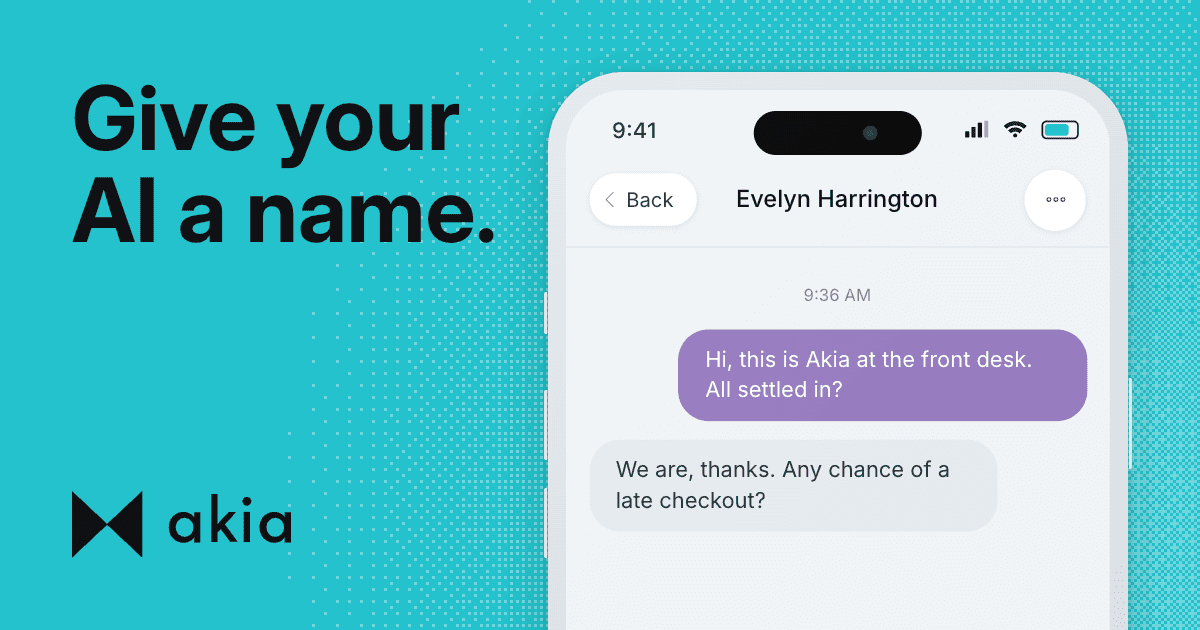
The second read: "Hello, this is Akia at the front desk! We hope you're getting settled into your stay! If you need anything, text us here." (The resort uses its own name for her. We've used Akia's here.)
Same property. Same moment in the stay. Nearly identical wording. The signed version pulled about 1.7 times the replies, across nearly 3,000 sends.
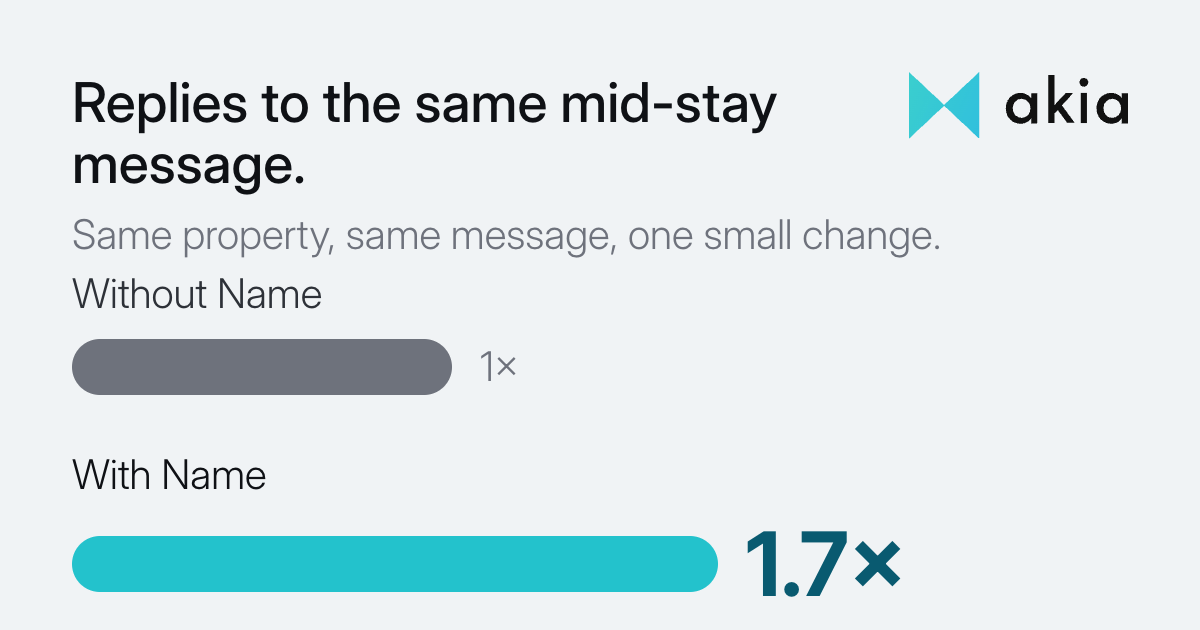
That's the whole finding, and it's a five-minute change. A guest reading the first message sees a notification from a building. A guest reading the second sees a message from someone at the front desk, and answering a person is a much smaller ask than answering a property.
Pick a name that suits the property. The resort in our study named theirs after the property itself, so she felt familiar to guests on first contact instead of like a stranger who works there.
Not every message needs a reply.
Booking confirmations in our data draw very few replies, and that's correct. A confirmation exists so a guest can find it later, not so they'll write back. The same goes for a receipt or a "we got your registration card" acknowledgment. Judge those on whether they answer the question before it gets asked.
The messages where replies matter are the ones where you're genuinely offering help: the settling-in note, the mid-stay check, the departure message. Those are invitations, and an invitation from a name gets taken up more often than an invitation from a building.
The in-stay window is the thinnest part of most journeys.
Across the portfolio operator in our study, the messages sent while a guest was on property drew far more replies than the ones sent before arrival. This wasn't consistent everywhere. The Hawaii resort saw its strongest engagement on a pre-arrival message, so treat this as a thing to check in your own data rather than a rule.
What was consistent is that most guest journeys are heavily front-loaded. Properties build careful pre-arrival sequences and then go quiet during the stay, which is exactly when the guest is standing in the room with a question about the pool.
If you add one message to your journey this month, make it a mid-stay note that opens the door, and sign it.
How to set this up with Akia.
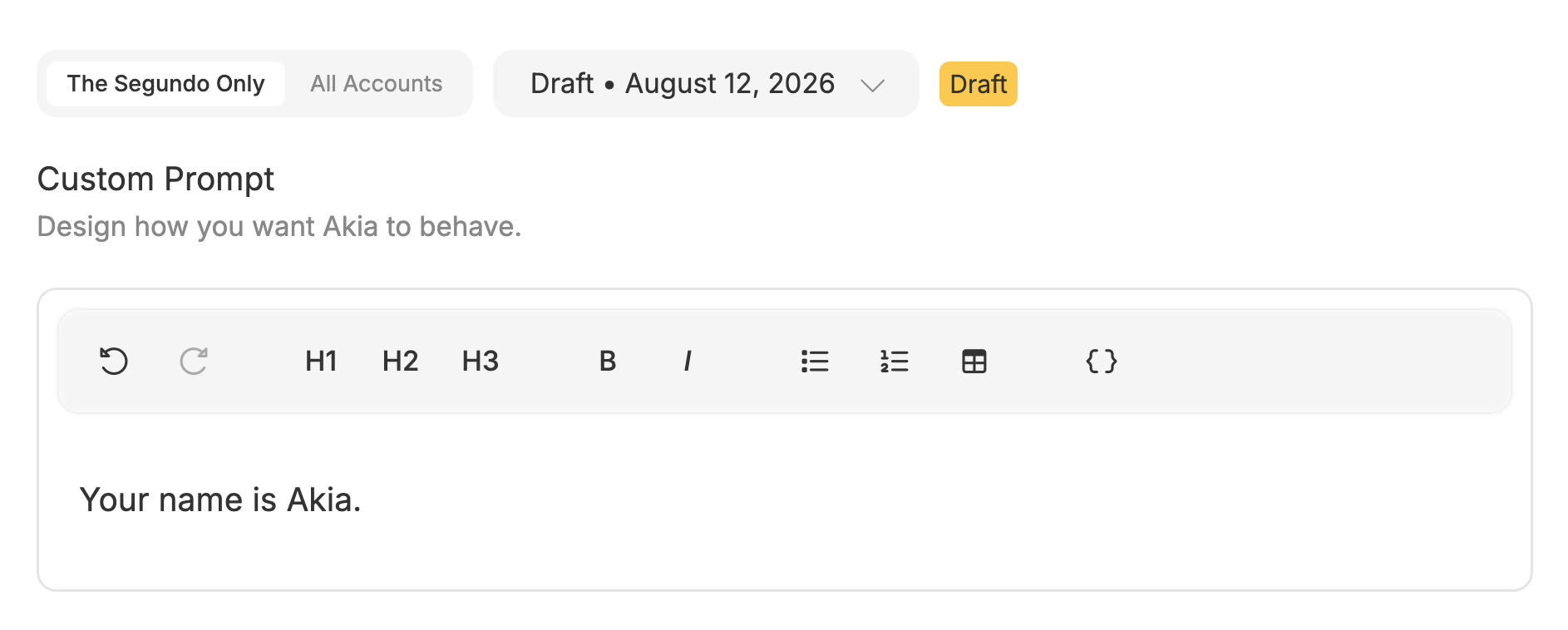
She answers to Akia, and she'll answer to anything else you like. When she works your guest messaging, you choose the name your guests see, so she can match the property. She can carry a different name at each property in a portfolio.
Tone of voice works the same way. You write how she should sound into her instructions, the same place you teach her your policies, and she'll hold that voice across every channel and every scheduled message. A beach resort and a mountain lodge shouldn't sound alike, and they don't have to.
The rest of the journey is built once. You set the moments you want covered, and Akia runs them for every stay. She answers whatever comes back, and brings in your team when she should. She learns your property from your Knowledge Base, so when a guest writes back asking about late checkout, she actually knows.
If you're weighing up what an AI agent should be doing in a property at all, we wrote about that in AI in hospitality.
Common questions.
What is the best way to communicate with hotel guests?
Text messaging gets the highest engagement of any guest channel in our data, and guests reply to it without installing anything. The practical setup is a single thread per guest that carries SMS, email, web chat, and OTA messages, so your team sees one conversation instead of four inboxes. Sign the messages with a name, and make sure whoever is behind that name can actually answer.
How often should you message a guest during their stay?
Most properties in our study send one message shortly after check-in and one near departure. The check-in message consistently earns the most replies of anything sent during the stay. Adding a second mid-stay touch is reasonable for stays longer than three nights, and less useful for a single night.
Should hotel messages be automated or personal?
This is a false choice in practice. Every message in this study was automated, and the automated messages that read like a person came from a named sender with a consistent voice. Automation decides when the message goes out. The name and the tone decide whether the guest answers it.
Does adding a name to automated messages actually work?
In our data, yes: the same message signed with a name pulled about 1.7 times the replies of the unsigned version, over nearly 3,000 sends. That's one property's numbers rather than a law of nature, and it costs nothing to run the same test on your own guests.
What should a mid-stay guest message say?
Keep it short, name the sender, and make the offer specific enough to act on. "Hello, this is Akia at the front desk, let me know if you need anything" outperformed the unsigned version of the same line. Avoid asking a question the guest has to think about, and don't stack a survey onto a message whose job is to open a door.