Most guides to hotel automation hand you a list of ideas. Very few tell you what other properties have already built.
So we looked. Across 770 properties, one pattern shows up almost everywhere.
The starting point is the same everywhere
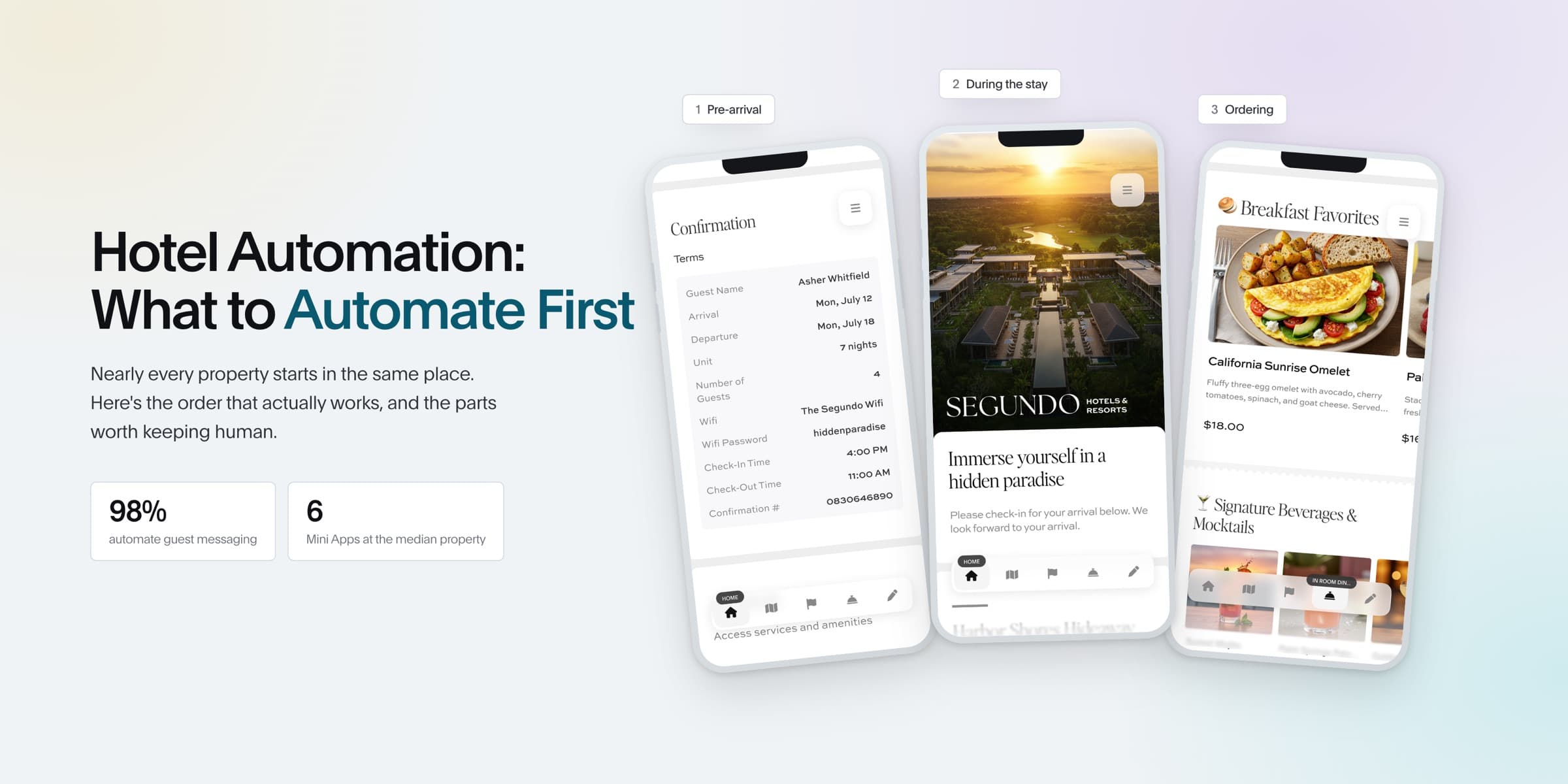
Two things are effectively universal. 98% automate guest messaging, and 94% have built Mini Apps, with the median property running 6 of them.
The messaging part won't surprise anyone. Guest messages are the loudest repetitive work in hospitality, so of course that's where automation starts.
The Mini Apps are the interesting half.
What a Mini App actually is
A Mini App is a little app Akia tucks straight into the chat. The guest gets a text, taps once, and they're in. No app store, no login.
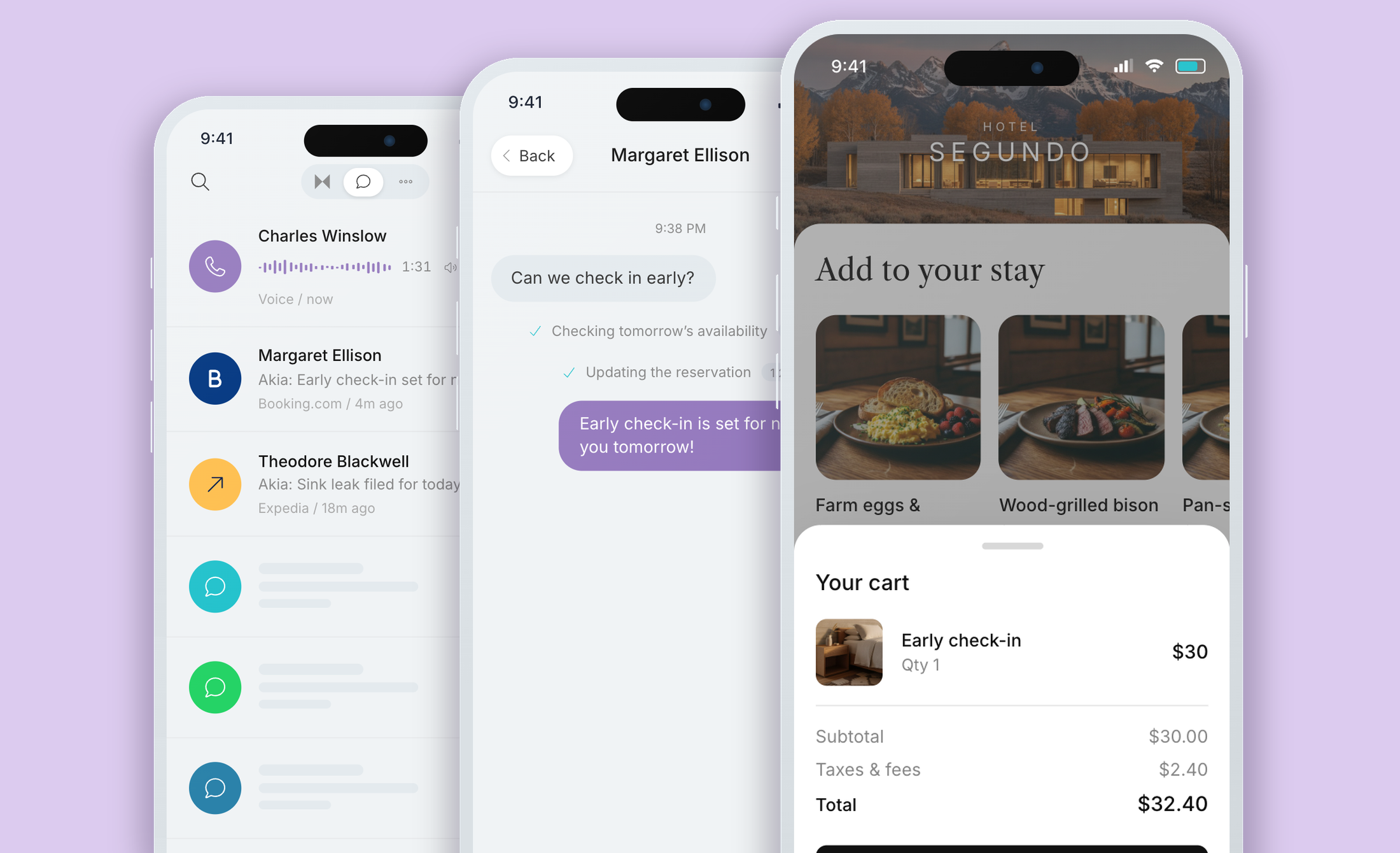
It arrives already knowing who they are and which stay they're on, so a registration form is half-filled before they touch it. And because it opens inside the conversation they were already having, there's no moment where they have to go and find something.
You build them yourself. Start from a template for the usual jobs like a registration card, a guidebook, or a checkout form, or lay one out from scratch with your own colours, logo, and photography. Properties end up building things nobody would have written on a feature list: a pet form, a shuttle request, a spa booking, a form for the one thing their guests always ask about.
The reason to care is engagement. Across 247,000 sessions this year, more than half of guests who open a check-in or registration Mini App finish it. It lands in a text people already read, and it takes one tap.
A typical automation flow
Sorted by what properties actually build, the stack follows the guest journey almost step for step.
Before arrival. The registration card and the agreement come first. It's paperwork that has to happen and nobody wants to do it standing at a desk. Akia sends it ahead, the guest fills it in from bed, and your team gets a completed form instead of a clipboard. She chases the ones who haven't finished, so nobody on your side is checking a list. More on digital check-in.
Arrival. The check-in flow, with the door code or room number waiting at the end of it. One thing worth knowing from the check-in data: most guests who complete a digital check-in do it on the day they arrive, not days ahead. Send the reminder the morning of, not a week out.
During the stay. The guidebook is the most-built app of the whole lot. Properties keep making them because guests keep asking the same twenty local questions, and Akia answers those herself from what you've put in her Knowledge Base. Ask her about the pool hours or the pet policy and she knows, because you told her. Your staff can ask her the same way, and we wrote up what to ask her first.
This is also where the automation stops being forms. A guest writes "the AC in 214 isn't working" and Akia reads it, recognises it as maintenance, and opens the task in the right queue with the room number already on it. Nobody transcribed anything. Your engineer sees it on their phone, and the guest gets told it's handled. See Tasks.
Checkout. Payments and the checkout flow, and often tipping, which quietly matters to housekeeping teams more than almost anything else on the list. Akia can take the payment inside the same conversation, so there's no folio conversation at the desk.
After the stay. A survey, catching the complaint while it's still fixable rather than reading it on Google the following week. When a score comes back low, she can flag it to a manager instead of filing it.
Underneath all of it, Akia is answering the messages that arrive at every stage. She knows which reservation she's talking about, so the answer's already right. More on how guest messaging works across channels.
What the flow tells you
Read it in order and the logic is plain. Properties automate paperwork and repeated questions first, because those tasks are identical every single time. Judgment comes last, or not at all.
Then there's upsells, which sit in a category of their own. Everything above them buys your team time back. This is the step that brings money in. Akia will sell the early check-in while you're pouring coffee, right inside the conversation the guest is already having with her.
What to leave alone
Three things are worth keeping human, and being straight about this is what separates automation that lasts from automation you switch off in a month.
Anything involving a refund decision. A guest who's already upset, where the first reply needs to come from a person. And a complaint mid-escalation, where handing it to software reads as a brush-off. Akia's good at spotting these and passing them over with the full thread attached, which is the part that matters.
Where to start
- Guest messaging. Nearly every property starts here, and it's the right call.
- Registration card and agreement. The fastest win for your front desk.
- Guidebook. It answers the questions that never stop.
- Payment and checkout. Already standard almost everywhere.
- Survey. Cheap to add once messaging is running.
- Upsells. Where automation stops saving time and starts making money.
FAQ
What is hotel automation? Software handling guest-facing and operational work without someone doing it by hand. In practice it covers messaging, registration, check-in, payments, guidebooks, requests, and surveys.
What should a property automate first? Guest messaging. Across 770 properties, 98% automate messaging before anything else, because it's the highest-volume repetitive work in hospitality.
What is a Mini App? A small app delivered inside a guest's text conversation. It needs no download or login, arrives knowing the guest's reservation, and can be built from a template or designed from scratch.
Do guests actually use them? Yes. More than half of guests who open a check-in or registration Mini App complete it.
When do guests complete a digital check-in? Most do it on their arrival day rather than in advance, so reminder timing matters more than the form design.
Can automation create tasks on its own? Yes. When a guest reports a problem, Akia can read the message, work out what it is, and open the task in the right queue without anyone retyping it.
Does hotel automation replace front desk staff? No. It clears repetitive work so the desk can handle guests who need a person. Refunds, escalations, and upset guests should stay with your team.
Do vacation rentals automate differently than hotels? Yes. Rentals lean on guidebooks and access codes, hotels on registration and front desk tasks. Messaging is universal to both.