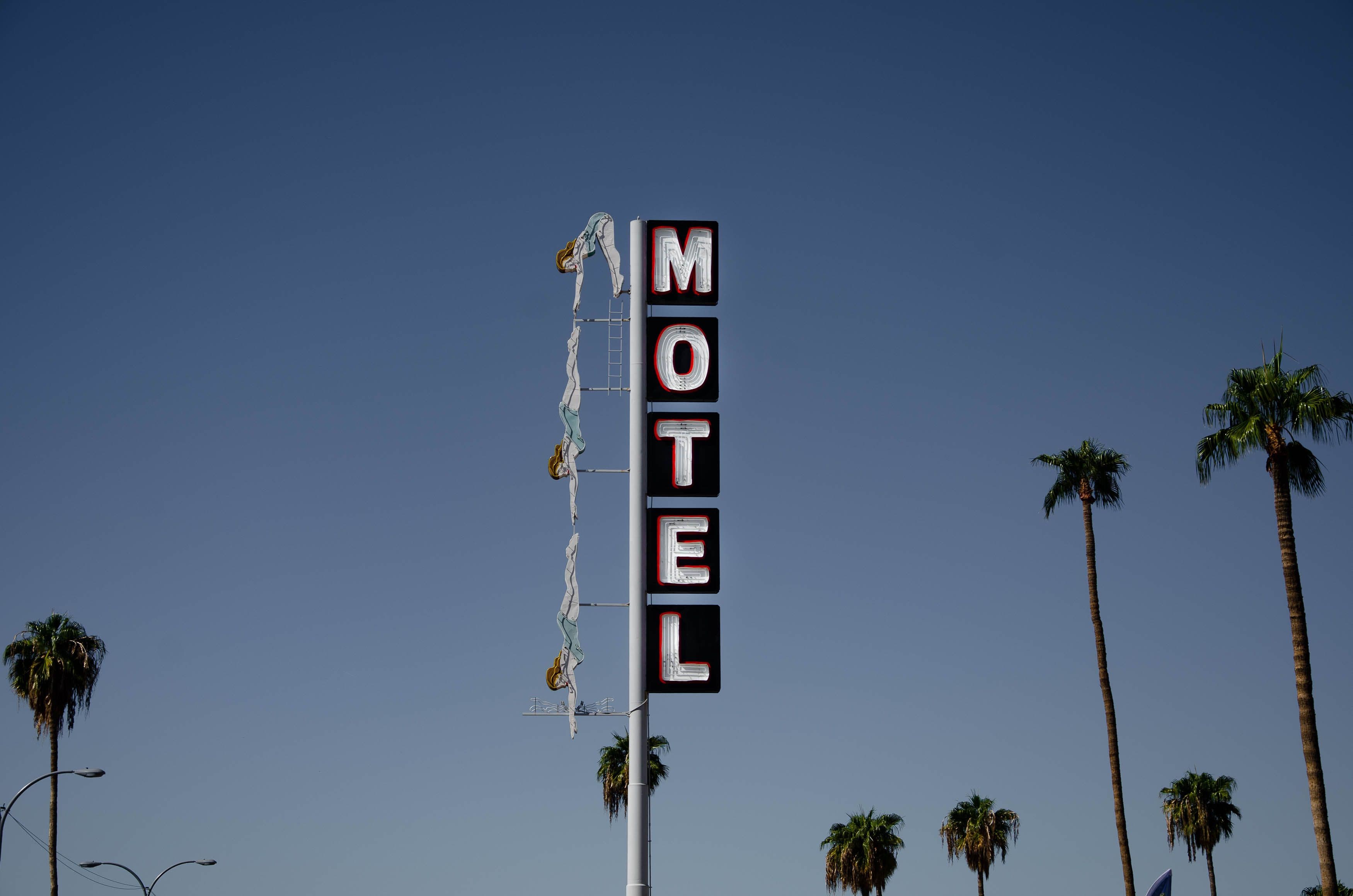
Motels and hotels look almost the same on a booking site: a room, a bed, a nightly rate. But they were built for different kinds of trips. One is designed for a quick stop off the highway. The other is designed to keep you comfortable for days. Once you know what separates them, choosing is easy.
The short version: a motel is a smaller, cheaper roadside property where your door opens right onto the parking lot. A hotel is a larger property with interior hallways, more amenities, and rooms for every kind of stay.
What is a hotel?
A hotel is a lodging property, usually several floors, where guest rooms open onto interior hallways. Hotels run the range from budget chains to luxury resorts, but they share a few traits: a staffed front desk, indoor common areas, and a menu of amenities that often includes a restaurant, pool, gym, room service, and a concierge. Rooms come in tiers, from a standard queen to a multi-room suite.
Hotels sit where people gather: downtowns, near airports, and at destinations. They're built for everything from a one-night business trip to a week-long vacation.
What is a motel?
Motel is a blend of "motor" and "hotel," coined in the 1920s for drivers who needed a bed along the highway. The design still reflects that. A motel is typically one or two stories arranged around a parking lot, with each room's door opening straight to the outside, so you can park a few steps from your bed.
Motels keep it simple: a clean room, free parking, and wifi. They cluster along highways, on the edges of town, and in rural areas where a road-tripper needs to stop for the night. The appeal is speed and price. You pull in, sleep, and get back on the road.
Motel vs hotel: the 6 real differences
| Motel | Hotel | |
|---|---|---|
| Layout | Exterior doors opening to the parking lot | Interior hallways |
| Price | Lower, basics only | Higher, more included |
| Amenities | Parking, wifi, maybe a small pool | Restaurant, pool, gym, room service, concierge |
| Size | One or two floors, few room types | Multiple floors, standard rooms to suites |
| Location | Highways, town outskirts, rural routes | City centers, airports, destinations |
| Typical stay | A night or two on the way somewhere | A night to a full week |
1. Layout and access
The clearest tell. At a motel, your door opens straight onto the parking lot, so you can unload the car in ten seconds. At a hotel, you park or valet, walk through a lobby, and reach your room down an interior hallway. Exterior access is convenient for a quick overnight. Interior access is quieter and more secure for a longer stay.
2. Price
Motels almost always cost less. You're paying for a clean bed and little else, which is exactly what a road trip calls for. Hotels charge more because the rate bundles in the pool, the gym, the restaurant, and the staff to run them. Whether that's worth it depends on how much of the building you'll actually use.
3. Amenities
Motels keep the list short: free parking, wifi, sometimes a small pool or a continental breakfast. Hotels compete on amenities, so you'll often find on-site dining, a fitness center, room service, and a concierge who can book your dinner. If the property is part of the trip, a hotel delivers more. If you just need to sleep, a motel's basics are plenty.
4. Size and rooms
Motels are compact, usually one or two floors with a handful of room types. Hotels run larger, with multiple floors and a range of rooms from a standard double to a suite with its own living room. More room types means more flexibility for families, business travelers, and longer stays.
5. Location
Motels follow the road. You'll find them along highways, at freeway exits, and on the edges of town, right where a driver needs them. Hotels follow the crowd, clustering downtown, near airports and convention centers, and at vacation destinations. Where you're headed often decides which one is even an option.
6. Length of stay
Motels are built for the quick stop, a night or two while you're passing through. Hotels flex to fit the trip, from a single business night to a week-long holiday, which is why they invest in the comforts that make a longer stay pleasant.
Which one should you book?
It comes down to the trip. Book a motel when you're driving through, watching the budget, and mostly need a safe, clean place to sleep with easy parking. Book a hotel when the property is part of the experience, when you want amenities on site, or when you're staying more than a night or two. Neither is better in the abstract. They're built for different journeys.
For operators: same guest, different expectations
Run a motel and a hotel, and the guests want different things, but the questions they text you are surprisingly alike. What time is check-in? Is there parking? Can I get a late checkout? Both kinds of property win the same way: answer fast, at any hour, without tying up the front desk.
That's what Akia does. She answers guest messages the second they land, day or night, whether you run six roadside rooms or a downtown high-rise. She handles check-in, shares the wifi, sells the late checkout, and knows each guest's reservation before she replies. Motel or hotel, she gives every guest a front-desk answer without the front-desk wait.
Frequently asked questions
Is a motel cheaper than a hotel? Usually, yes. Motels offer fewer amenities and a simpler build, so nightly rates run lower. You're paying for a clean room and parking rather than a pool, restaurant, and room service.
Are motels safe? A well-run motel is perfectly safe. The main difference is that motel rooms open to the outside rather than an interior hallway, so many travelers prefer a hotel for late arrivals or longer stays. Reviews are your best guide to any specific property.
What does "motel" stand for? It's a blend of "motor" and "hotel," coined in the 1920s for travelers driving between cities who needed a place to stop overnight.
Can you stay long-term in a motel? You can, and some motels offer weekly rates, but they're designed for short stays. For anything beyond a few nights, a hotel or an extended-stay property is usually more comfortable.
What's the difference between a motel and an inn? An inn is typically a small, older lodging property, often with a restaurant or bar and more character, while a motel is a roadside property built around a parking lot. Both are usually smaller than a hotel.