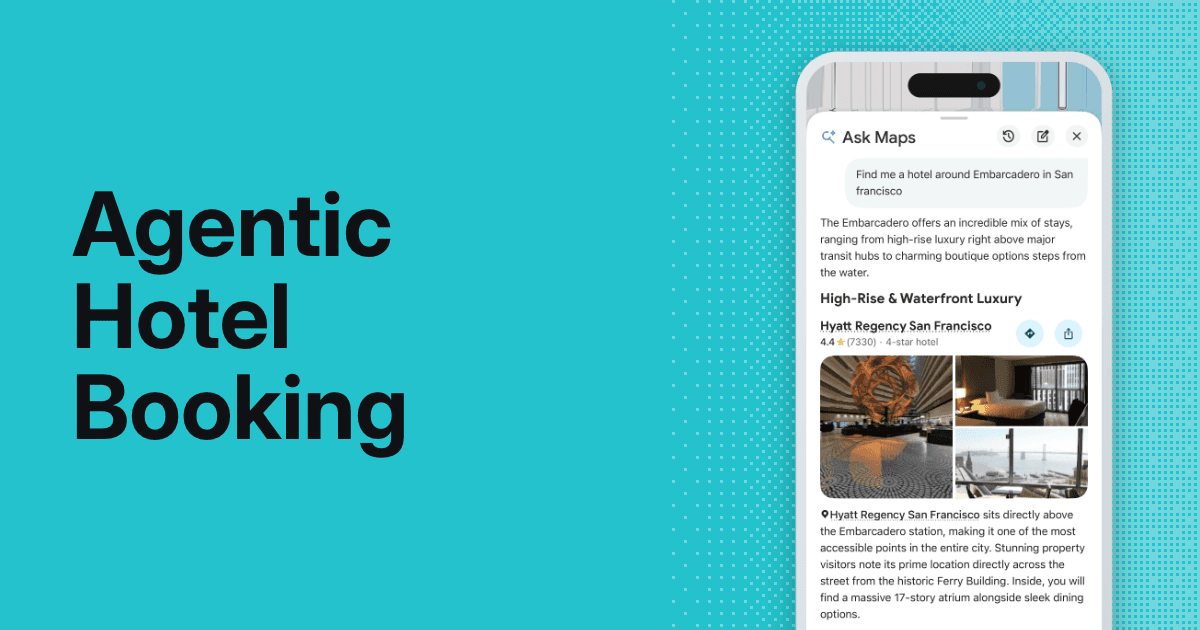
Ask Google Maps for a hotel and it does the work you used to do yourself. It reads what you want, then compares live rates and real availability across properties. It hands you a booking that is one tap away. You still tap through to the hotel or the OTA to finish and pay, for now.
In August 2026, Google gave its Maps assistant, Ask Maps, the ability to act on real tasks: order food, buy tickets, and shop for a place to stay. The hotel search is live as a limited US test, built with Amadeus. You describe the stay you want, in plain language, and Ask Maps does the finding.
What Google just launched
- Real answers, not ranges. Ask Maps returns live prices and real availability, then compares them for you.
- It handles a messy request. A traveler can ask for "a decently priced, top-rated hotel with an artsy vibe, walkable to a gym and restaurants" for set dates, and get a shortlist back.
- You still book on the partner's site. Google has said it will not become an OTA. It compares and checks availability, then links you out to the hotel or the OTA to complete the reservation and pay. Booking Holdings, the parent of Booking.com, is one of the first partners, and its CEO confirmed some of their traffic already runs through this.
This is a step past what shipped last year. Booking.com and Expedia went into ChatGPT for discovery. Ask Maps goes further and prices the whole shortlist against your request. The last step, paying without leaving the assistant, is the part Google is still building. It has already built the plumbing for it: the Agent Payments Protocol, announced in September 2025 with more than sixty partners, lets an AI agent authorize and complete a payment on a person's behalf. When that meets Ask Maps, the click-through disappears.
What agentic hotel booking actually means
Agentic hotel booking is when a guest describes the stay they want and an AI agent searches, compares, and books it for them. Today the agent takes you right up to the reservation and you tap to finish. As the payment layer lands, the agent completes the whole thing, end to end.
What it means for your property
1. The agent reads your property before a human ever does.An AI agent picks between hotels by reading machine-legible facts: rate, availability, location, amenities, reviews. If your details are thin or inconsistent across the web, the agent has less to work with and quietly ranks you lower.
2. The agent's default path runs through the OTA.Booking Holdings is a launch partner in Google's test, because that is where clean inventory and instant checkout already live. Left alone, agentic booking sends even more reservations through the OTAs, at their commission.
3. The big brands are already answering with agents of their own.Marriott launched Ask Bonvoy in June 2026. IHG and Wyndham opened apps inside ChatGPT this spring. The chains saw this coming and built their own front door. An independent property needs one too.
4. Accuracy decides who the agent picks.A wrong pet policy or a rate that does not match live data is not a small error anymore. It is the reason the agent chose the hotel down the street.
How to stay in the guest's path
- Keep your public details accurate and current everywhere an agent might read them: rate, policies, amenities, photos, and your reviews, which weigh heavily in what AI recommends.
- Run a web chat that answers the questions shoppers ask and moves them toward a direct booking, so you own the guest instead of renting them from an OTA.
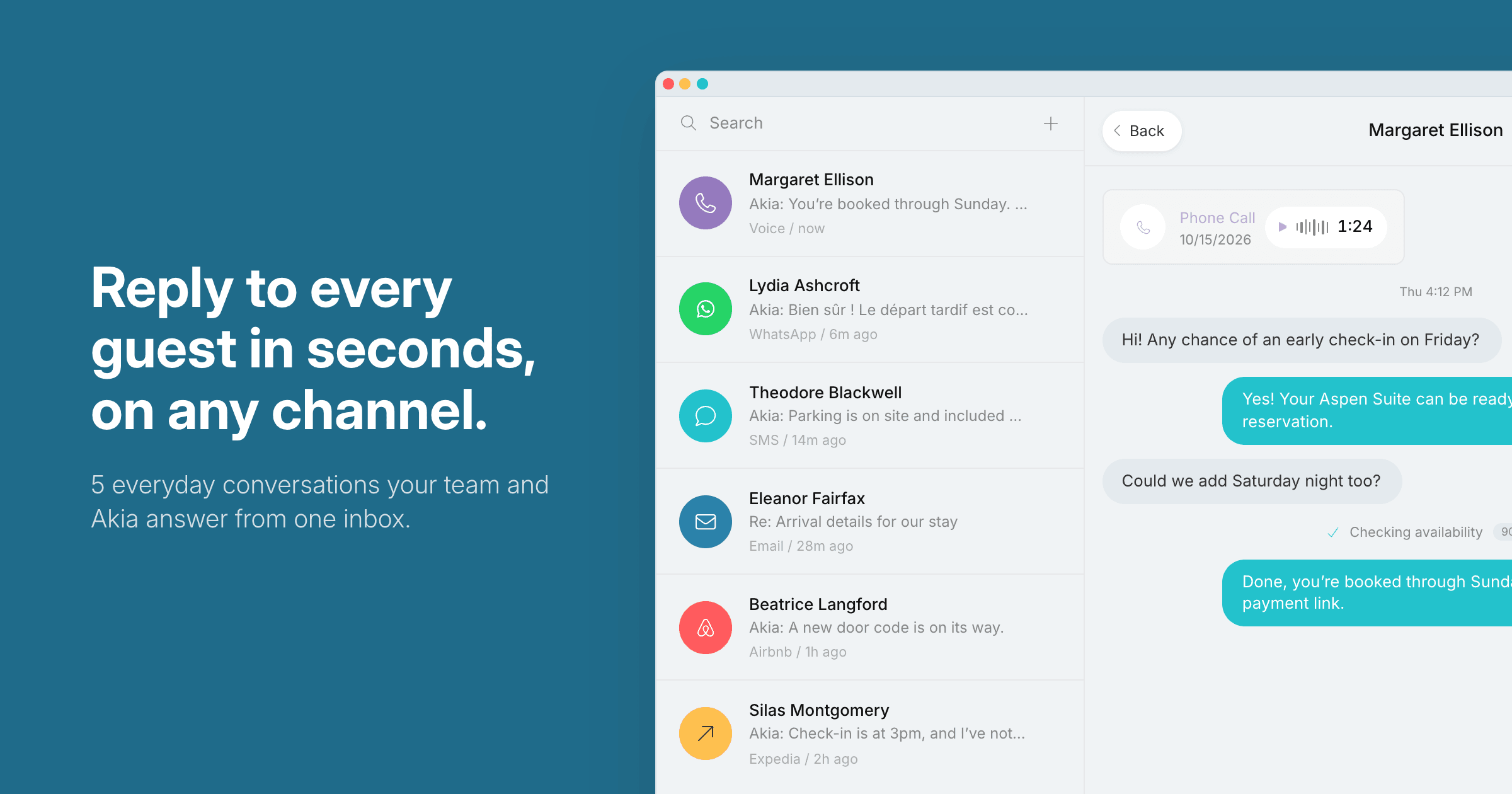
- Give your own agent the facts. Trained through her Knowledge Base, Akia answers rate, availability, and policy questions from live data, which is exactly what an AI shopper is checking.
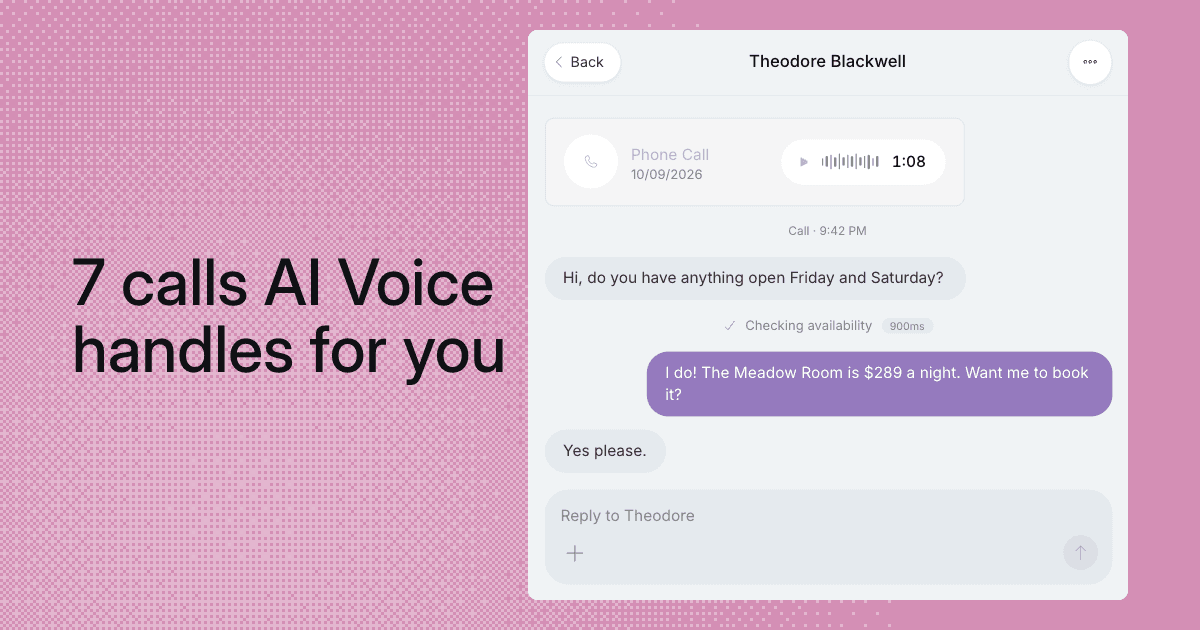
- Extend it to the phone with AI Voice, so a caller becomes a booking instead of a missed call.
For the full playbook, read how to get your hotel found and booked by AI.
The shift worth sitting with
Guests are about to arrive with agents of their own. The property that wins is the one that meets them with an agent of its own.
Akia is a real AI agent for hospitality. She reads what a guest needs and handles it herself, in messaging and on the phone. She answers the rate and availability questions a shopper asks, then gets the direct booking. As agentic booking spreads, that is the difference between being a row in an OTA's inventory and being a property a guest chose to talk to.
Can AI agents book hotels now?
Partly. Google is running a US test where Ask Maps finds a hotel, compares live prices, and checks availability, then links you to a partner to complete the booking and pay. It does the finding and comparing. You still finish on the hotel's or the OTA's site. Ask Maps cannot take payment itself yet, and the checkout inside the assistant is the part being built.
What is Google Ask Maps?
Ask Maps is the AI assistant inside Google Maps. As of August 2026 it can order food, buy event tickets, and search hotels with live prices and availability, then hand you to a partner to complete the booking, answering plain-language requests instead of returning a list of links.
Will agentic booking send more bookings to the OTAs?
It can, because the OTAs are Google's booking partners and hold the cleanest inventory. A property keeps direct revenue by owning a channel that answers questions and takes a booking in the same conversation, so the guest's agent has a direct option to choose.
How should hotels prepare for agentic hotel booking?
Keep your property information accurate and consistent so agents read clean data, treat reviews as ranking signals, and run your own agent so a guest's AI is talking to your AI instead of routing everything through an OTA.
Bottom line
Agentic hotel booking is not a forecast anymore. Google is testing it, the OTAs are the booking partners, and the big brands have already built their own agents. Properties that keep their information clean and run an agent of their own will still get the direct booking. Everyone else becomes inventory.