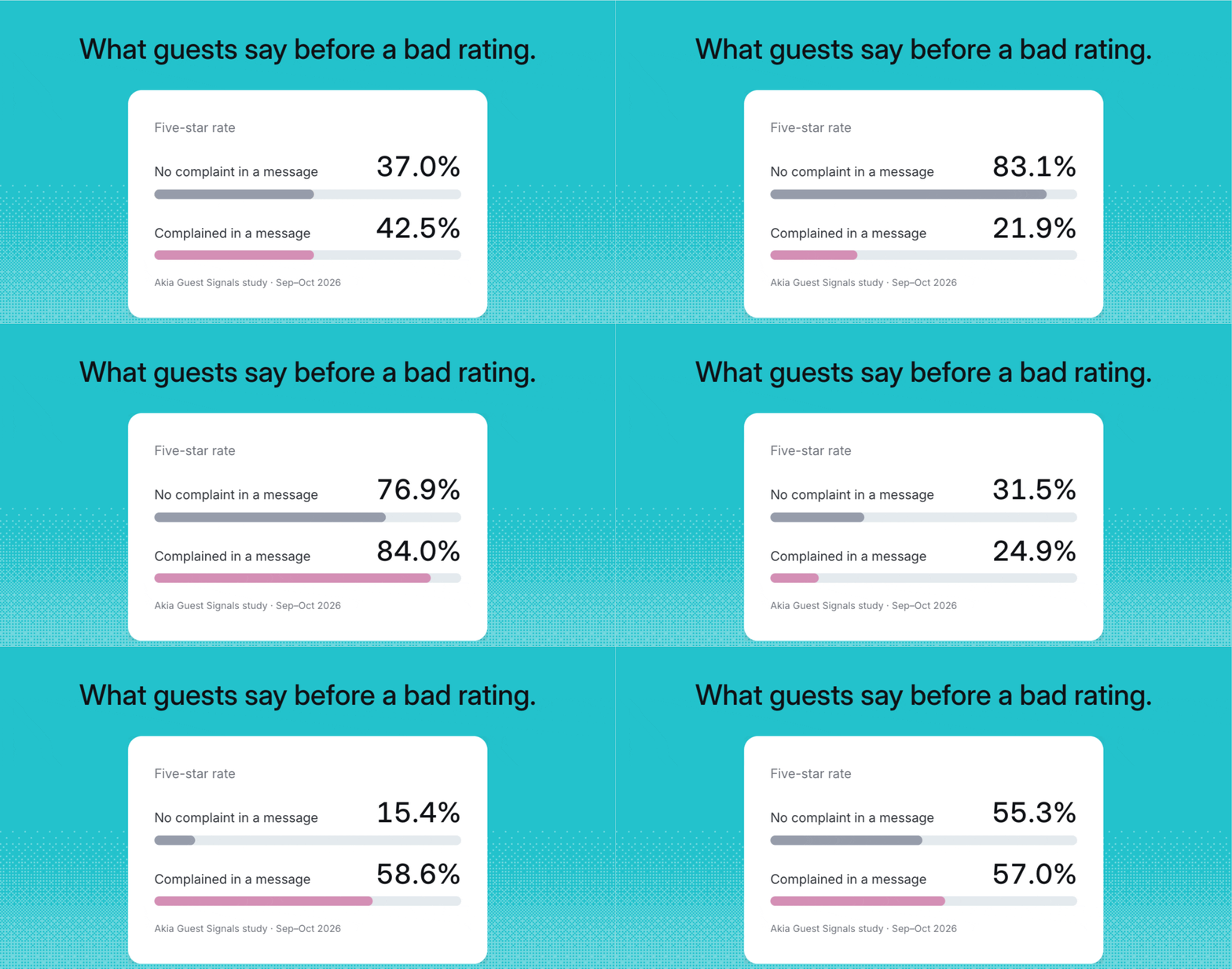
Across 77,729 rated stays on Akia, guests who complained in a message gave five stars 39.9% of the time, against 76.7% for guests who didn't, and 85% of those complaints arrived before checkout.
We read the most recent ones for the words that come before a bad rating, when guests say them, and the moment to step in.
Key findings
- Across 77,729 rated stays, guests who complained in a message gave five stars 39.9% of the time, against 76.7% for stays without a complaint.
- Guests who wrote words like "dirty" or "smell" gave five stars 21.1% of the time. Angry words like "frustrated" or "terrible" dropped it to 13.3%.
- 85% of complaints are said by checkout day, while the guest is still on property or on the way out. Even for the most damaging words, 3 in 4 arrive before checkout.
- Five-star rates fall as properties grow, from 79.6% at 1–20 rooms to 69.4% at 150+.
Guests tell you how the stay is going long before the survey does. We matched their messages against post-stay ratings to find the patterns a property can act on.
Which guest complaints cost a hotel the most stars?
Cleanliness and angry language cost a hotel the most stars.
A guest who uses words like "dirty" or "smell" gives five stars only 21% of the time, against 77% for stays with no complaint. Angry language drops it to 13%.
If cleanliness sounds familiar, it's also the #1 reason guests leave a 1-star rating.
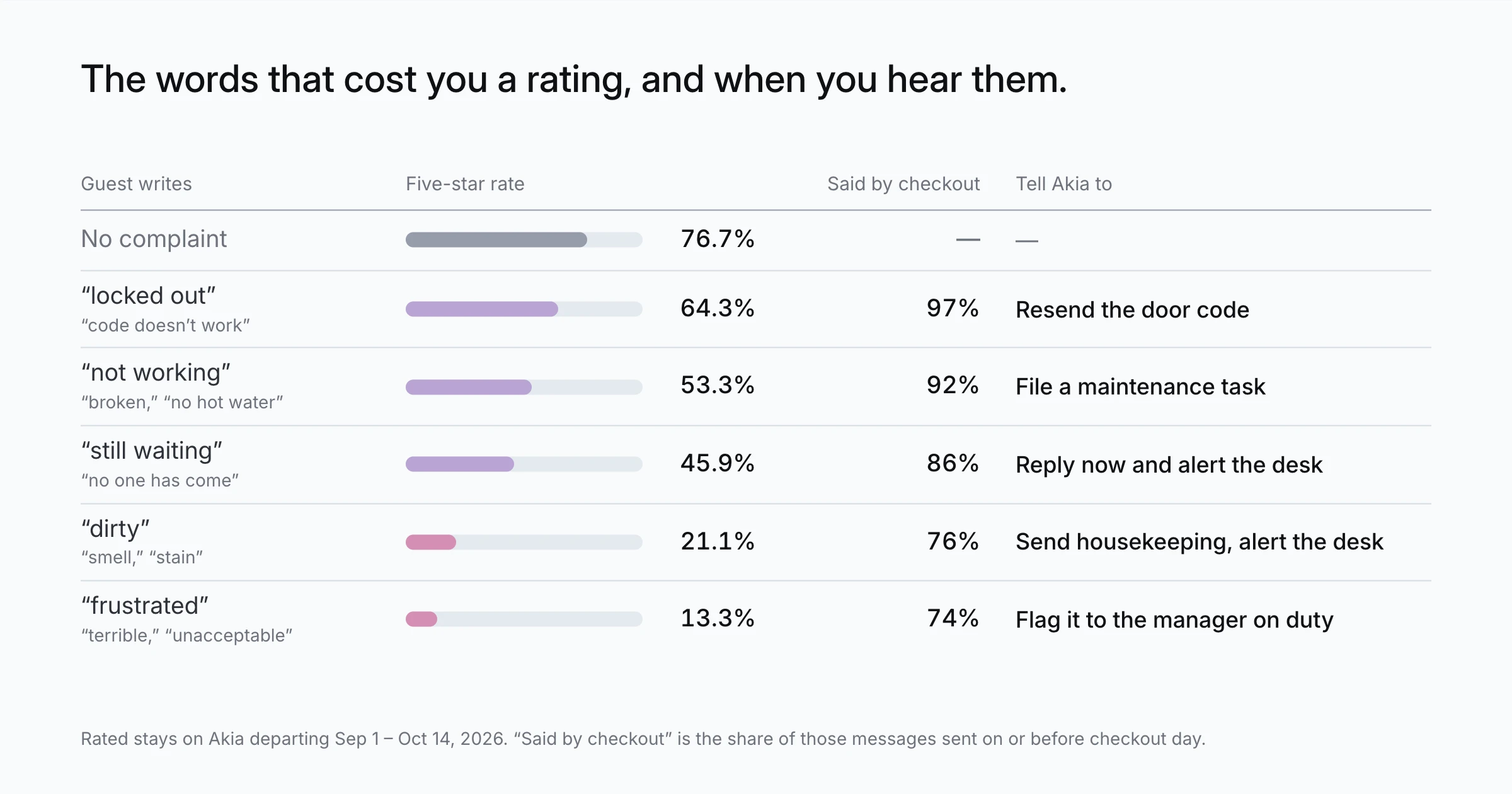
Guests who wrote "dirty" gave five stars 21.1% of the time and guests who wrote "frustrated" 13.3%, against 76.7% with no complaint. Most of these messages arrive before checkout, from 74% for angry words to 97% for lockouts.
Some complaints are cheaper to fix
Physical problems need a remedy, like a re-clean, a dispatch, or a room move.
Waiting is cheaper to fix, because a fast reply is the remedy. Lockouts do the least damage of all at 64%.
When do hotel guests complain?
85% of guest complaints are said by checkout day, while the guest is still on property or on the way out. Even the most damaging words, "dirty" and "frustrated," arrive before checkout 3 times in 4.
Almost half lands mid-stay, when there's plenty of time to fix it. A post-stay survey only hears about it once the guest has gone.
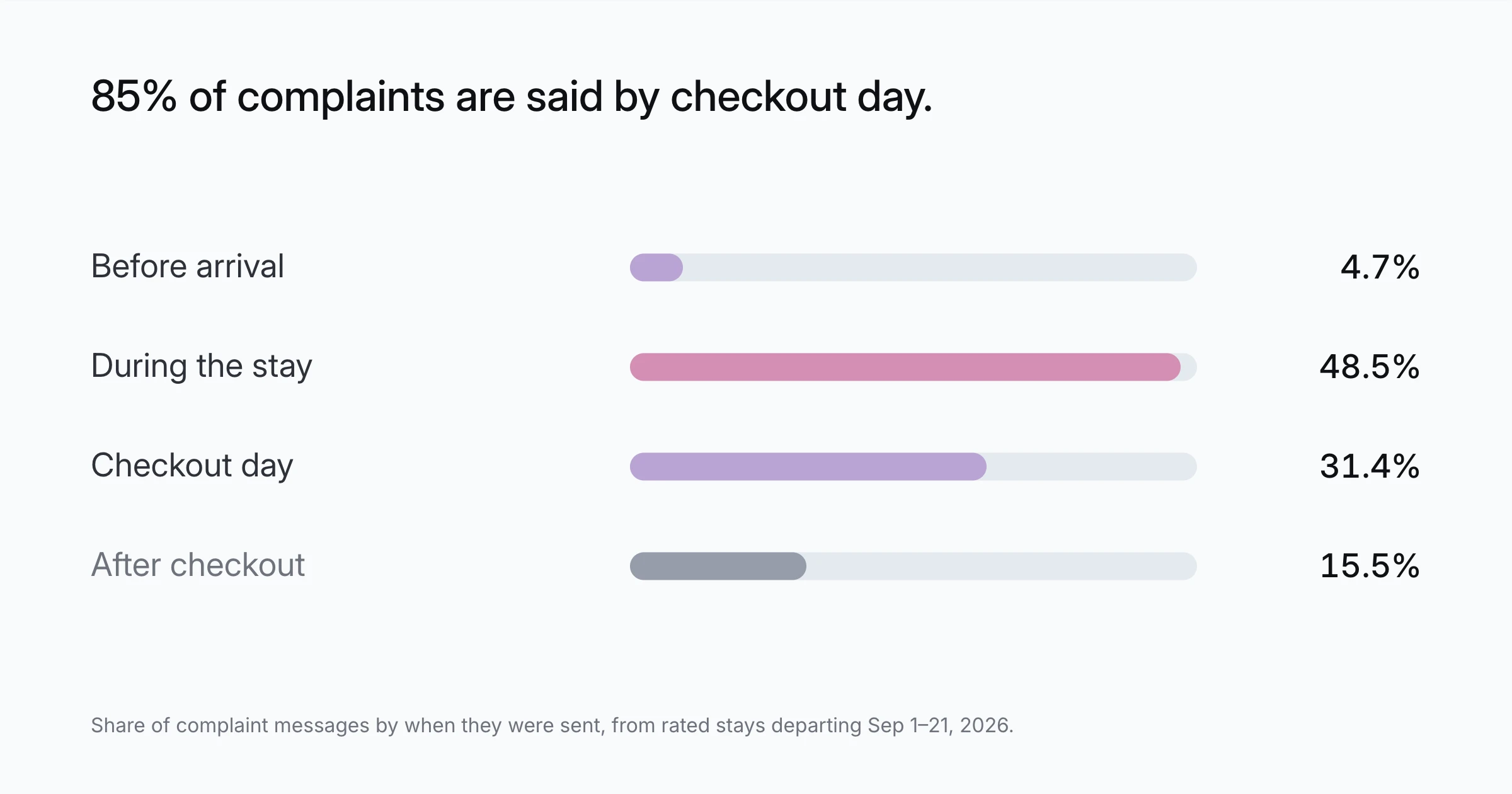
48.5% of complaint messages arrive during the stay and 31.4% on checkout day. Only 15.5% come after the guest has left.
The survey keeps score after the stay, while the chat sounds the alarm while there's still time to change the rating.
Do larger hotels get lower ratings?
Five-star rates fall steadily as properties grow, from 79.6% at 1–20 rooms to 69.4% at 150+. More rooms mean more threads for a front desk to miss.
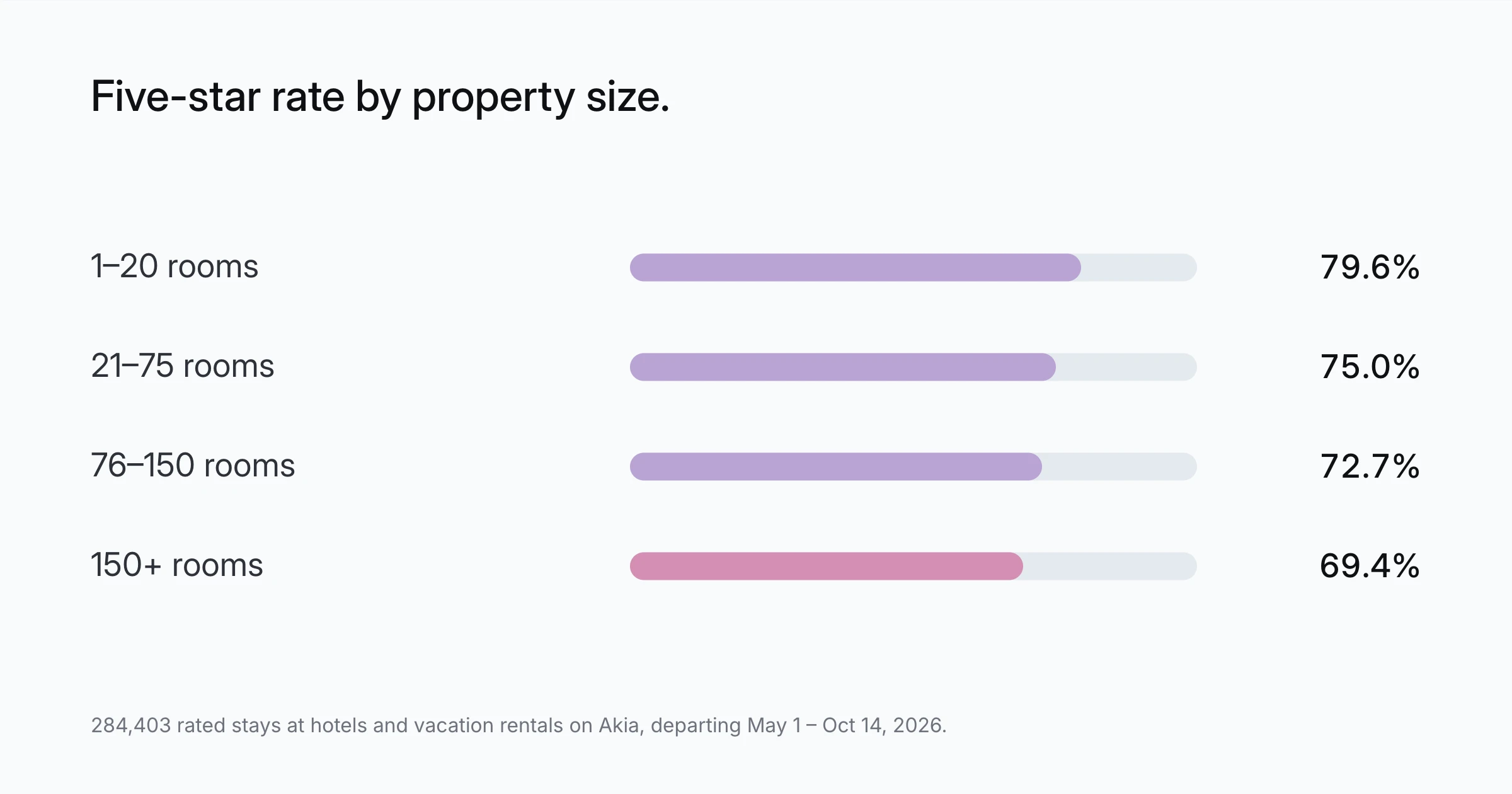
Properties with 1–20 rooms get five stars 79.6% of the time, falling to 69.4% at 150 rooms or more.
That's where reading every message in real time pays off most. It's how a bad stay gets caught on night one instead of in a review a week later.
How can a hotel find its top guest complaints?
Start by asking Ask Akia what guests complained about most last month.
Ask Akia pulls the complaints from your guest messages and ranks them, so you set up the ones that matter at your property first.
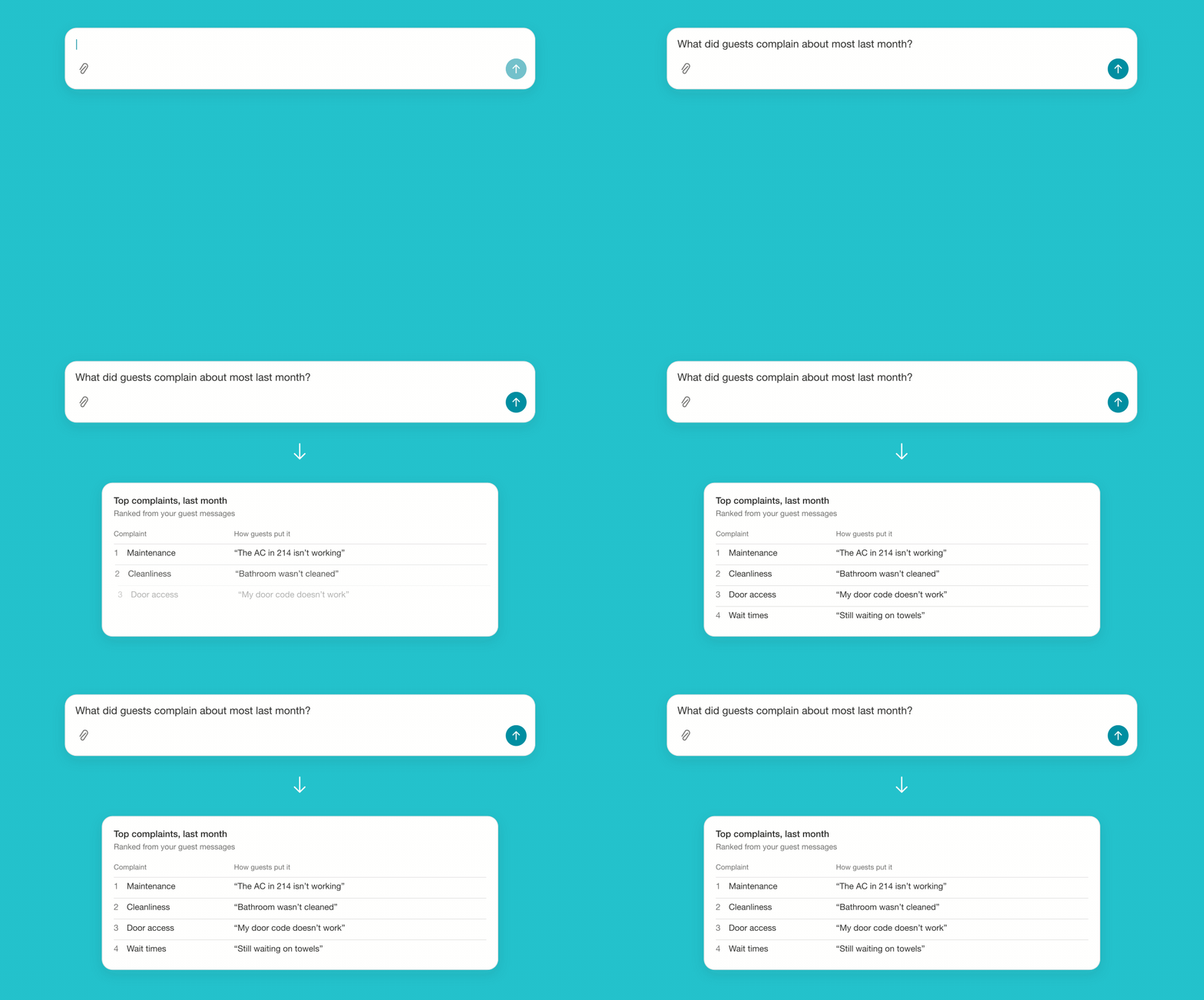
Ask Akia pulls the most common complaints from your guest messages, with an example of how guests put each one. Example shown for Hotel Segundo, a sample property.
New to Ask Akia? Here's how the same AI that handles your guests works for your team.
How can an AI agent fix guest complaints mid-stay?
Hotels can set an AI agent to act on the words that predict a bad rating. A guest who writes "locked out" gets a new door code, and a "dirty" room gets housekeeping before the guest has to ask twice.
You tell Akia what to do the moment a guest writes one of these words, and the action happens mid-stay, while it can still change the rating.
Turn each complaint into a Skill
Tell Ask Akia what should happen, like "When a guest writes 'locked out,' resend their door code, and when they write 'dirty,' file a housekeeping task and let the front desk know."
Ask Akia writes the Skill, and you approve it before it goes live. You set these up once with Skills, and they run on every stay.
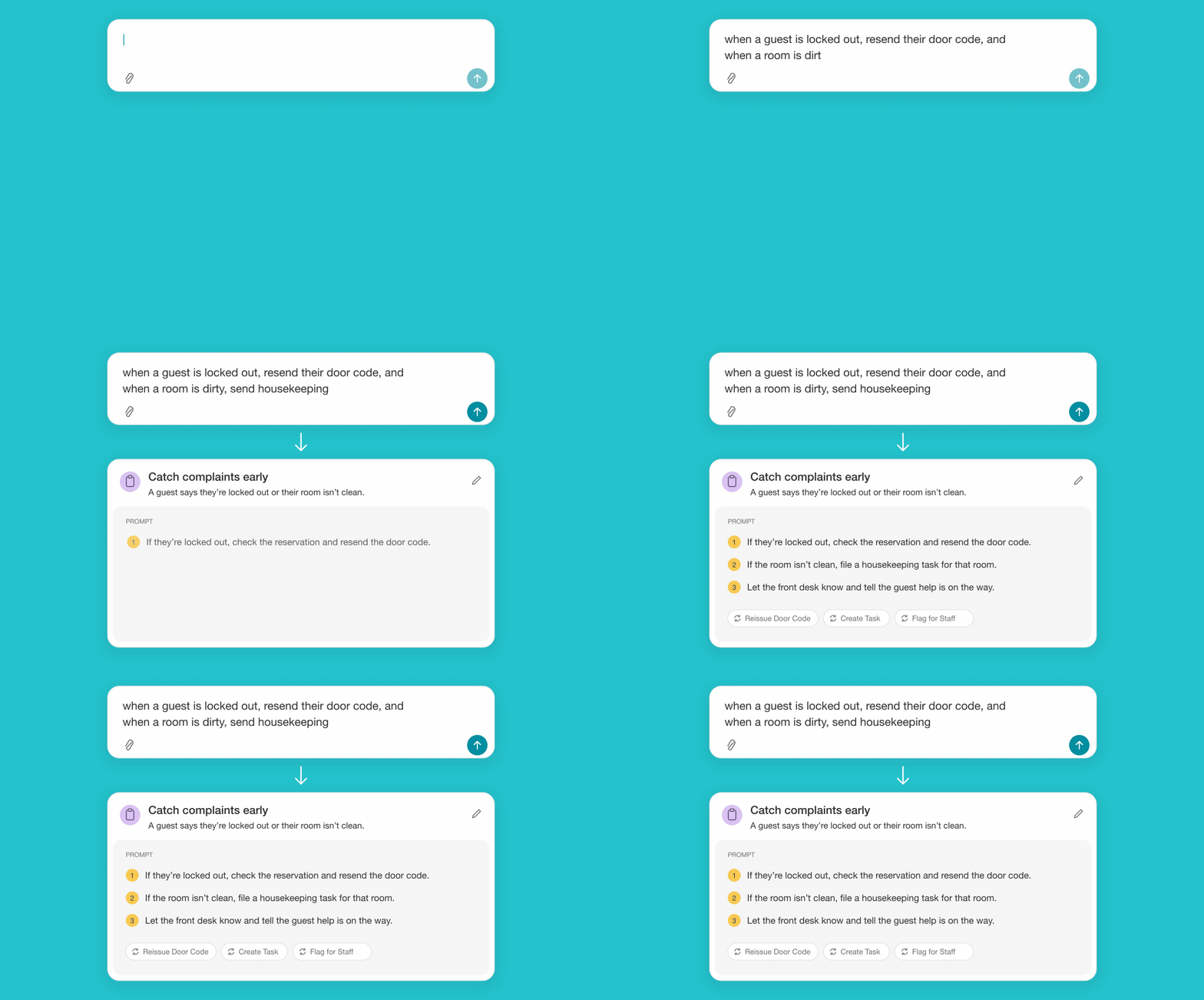
One message to Ask Akia becomes a Skill your AI agent follows on every stay.
Bring in a person when it matters
Akia handles what it can fix on its own and brings in the right person for the rest.
An angry guest is the clearest case. A message with "frustrated" or "unacceptable" goes straight to the manager on duty, so a person reaches out while the guest is still on property.
Set it up once with Skills and your Knowledge Base
A Skill tells Akia what to do when a complaint comes up, like resending the door code when a guest is locked out or sending housekeeping when a room isn't clean.
Your Knowledge Base holds what your property can actually offer to make it right, from a room move to late checkout, so the fix Akia offers is one your team can deliver.
How can a hotel personalize a stay from guest messages?
Guest messages that mention a birthday, an anniversary, a wedding, or a first visit tell a hotel exactly how to personalize the stay, and an AI agent can act on them the moment they arrive.
A guest who writes "it's our anniversary" has handed you the plan, so each phrase comes with a move.
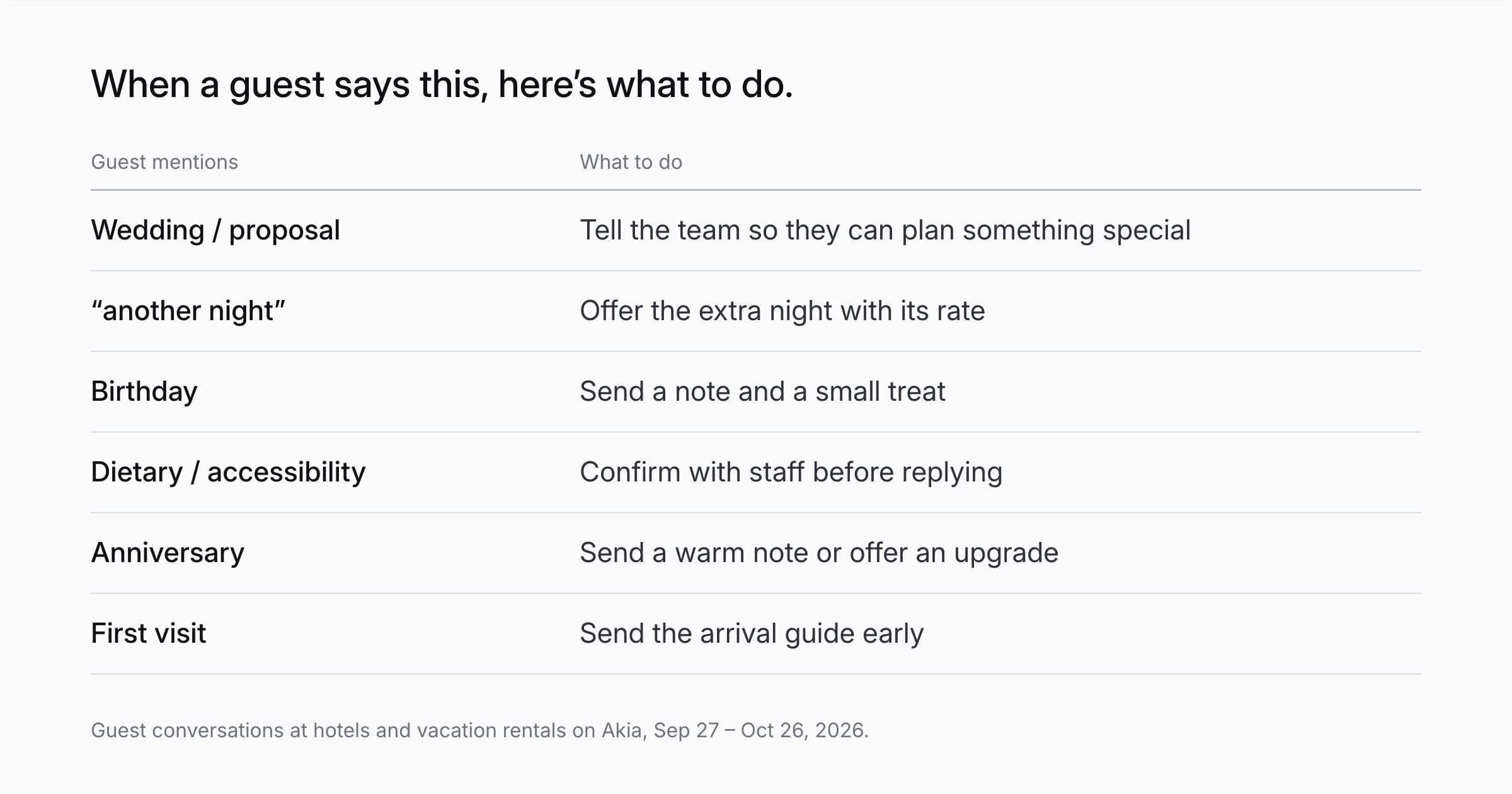
Six phrases worth acting on, and the move each one calls for. Dietary and accessibility requests are the one group to confirm with staff first.
Ask guests what brings them to town
The simplest move is to ask. Add "What brings you to town?" to your pre-arrival message, and guests will tell you about the birthday or the anniversary before they arrive.
Akia picks up the answer and acts on it, so the birthday guest gets a note on the day and the first-time guest gets the arrival guide early.
Setting it up takes one message. Tell Ask Akia what you want, like "When a guest mentions an anniversary, send a note and offer the suite upgrade," and Ask Akia builds the Skill or the message for you. You review it and approve it before it goes live.
"Another night" is one of the most common things guests write, and each one is a guest asking to buy more. Dietary and accessibility requests are the exception, because a wrong answer costs far more, so Akia checks with your team before replying.
Questions, answered.
What are the most common hotel guest complaints?
In Akia's study, the most common complaint in guest messages is something not working, like the wifi, the AC, or the hot water, followed by cleanliness, lockouts, and waiting for help. Cleanliness costs the most: guests who complain about it give five stars only 21.1% of the time.
How much does a complaint in a guest message lower a hotel rating?
Across 77,729 rated stays at hotels and vacation rentals on Akia, guests who complained in a message gave five stars 39.9% of the time. Guests who didn't complain gave five stars 76.7% of the time. About 6% of rated stays included a complaint.