A guest books through Airbnb, has a great stay, and books through Airbnb again next year.
A family finds a beach house on Airbnb, books a week, gets a friendly welcome message, checks in early because the host arranged it, and leaves a five-star review. Twelve months later they want to go back. They don't remember the property's own website. They don't have the owner's email. What they have is an Airbnb search history, so they open the app and book the same house through the same channel, and the operator pays the same 3% host fee they paid the first time. Nothing went wrong here. The stay was good, the guest was happy, and the operator still lost a chunk of the booking to a platform that did nothing the second time except show up in a search.
This is the default outcome for most vacation rental operators, and it compounds. Every returning guest who rebooks through the OTA is a guest the operator already earned the loyalty of and still pays a toll on.
What "getting direct bookings" actually means.
Having a booking website is not the same as getting direct bookings. What closes that gap is building a direct-booking program around it. Plenty of operators have one and still see most of their repeat guests cycle back through Airbnb or Vrbo, because a website only works if the guest remembers it exists and has a reason to use it instead of the app already on their phone.
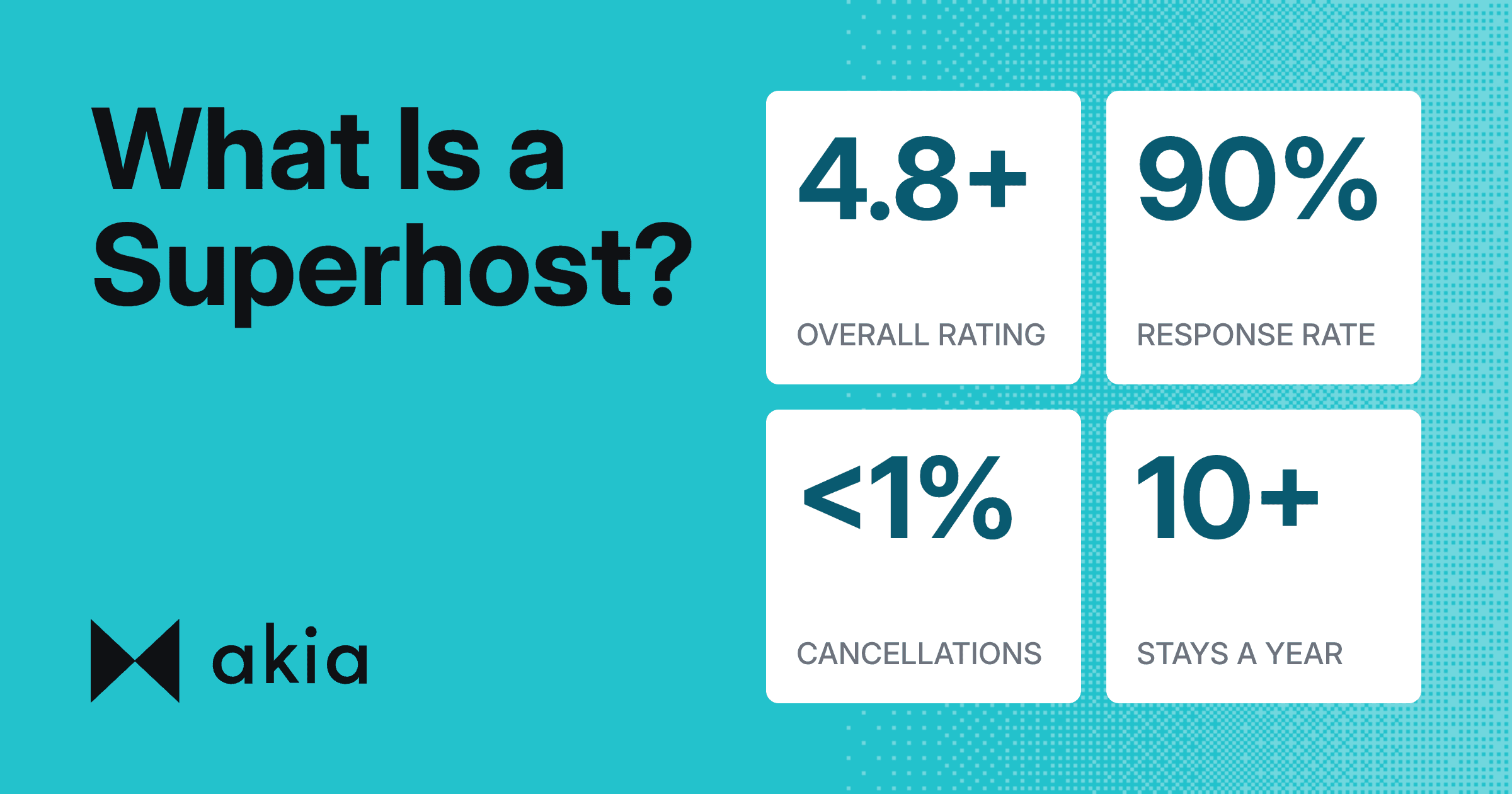
Getting direct bookings means three things happening together: capturing a guest's real contact information even when the reservation started on an OTA, knowing which guests are OTA-sourced versus already direct so you can treat them differently, and giving OTA guests a specific reason and moment to book direct next time. Skip any one of those three and the website alone won't move the number.
Why this is worth fixing.
OTA commissions are not small. Airbnb's split-fee model runs about 3% to hosts, its single-fee model runs 14% to 16%, and Vrbo charges roughly 5% plus 3% payment processing. Hotel-facing OTAs like Booking.com and Expedia typically take 15% to 25%. On a $2,000 weeklong stay, that is real money leaving the business on every booking, including the ones from guests who already know and like the property.
Direct guests also behave differently once they're direct. 2026 U.S. booking data shows direct reservations running 45% longer stays and 51% longer booking windows than OTA reservations, meaning direct guests plan further ahead and stay longer once they arrive. And the opportunity is wide open: about 70% of short-term rental operators already have a direct booking website, but nearly two-thirds of them still generate less than 25% of bookings through it, and 18% get none at all. The website exists. The conversion mechanism usually doesn't.
None of this means dropping OTAs. They still account for roughly 55% of hotel bookings and remain the primary discovery channel for new guests who've never heard of a property. The goal is converting the guests OTAs already found for you into guests who come back on your terms.
Five ways operators actually pursue direct bookings.
Not every tactic here does the same job. Know which gap you're closing before picking a tool.
1. Direct booking website builders. Tools like Lodgify, Hospitable, and CraftedStays give a property its own bookable site with live availability. This solves discoverability for guests who already intend to book direct. It does nothing for guests who don't know the site exists.
2. OTA guest data capture. Requiring an email address during digital check-in, ID verification, or a pre-arrival form, even on OTA-sourced reservations, is what turns an anonymous Airbnb booking into a real contact record. Without this step, there's no one to market a direct booking to later.
3. Post-stay win-back campaigns. Automated email or SMS sequences sent after checkout, specifically to guests whose stay originated on an OTA, inviting them to book direct next time. This only works once step 2 has produced a real contact to send it to.
4. Direct-booking incentives. A waived early check-in fee, a small discount, or a perk offered only to guests who book direct. This gives the guest an actual reason to change behavior instead of defaulting to the app they used last time.
5. Unified guest tracking. A system that tags every reservation by source and follows the guest across stays, so an operator can see who's OTA-only, who's converted to direct, and which campaigns are driving the switch. Without this, the first four tactics run blind.
Six practices that move the direct-booking number.
1. Require an email at check-in, every time. OTAs mask guest contact details by design. A digital check-in or ID verification step that asks for an email address, even on an Airbnb or Vrbo reservation, is the single most effective move available. No contact info, no way to invite anyone back.
2. Give direct bookers something OTA guests don't get. Ski Country Resorts waives early check-in fees specifically for guests who book direct, which gives returning guests a concrete incentive to skip the OTA next time instead of a vague appeal to loyalty.
3. Segment the post-stay campaign by booking source. A guest who already books direct doesn't need a "book direct" pitch. A guest who arrived through Expedia does. Sending the same message to both wastes the message on people who don't need it.
4. Exclude guests with upcoming reservations from win-back offers. Someone who already has a return trip booked doesn't need a discount to book again. Filtering them out keeps the incentive budget pointed at guests who actually need a reason to switch.
5. Match the direct site to the OTA listing experience. Same photos, live availability, and instant confirmation. A direct site that requires a phone call or a 24-hour wait for confirmation will lose to the one-tap Airbnb checkout every time.
6. Track booking source on every guest profile. Without it, "are we getting more direct bookings" is a guess. With it, it's a number you can watch move.
Five mistakes that quietly cap direct-booking revenue.
1. Building the website and stopping there. A direct booking site with no guest data capture and no follow-up campaign is a page that only converts guests who were already going to book direct anyway.
2. Treating every guest the same regardless of source. OTA guests and direct guests are at different points in the relationship. A single generic newsletter to both misses the entire point of segmentation.
3. Competing on price alone. Undercutting the OTA rate on the direct site starts a race to the bottom that erodes margin faster than the commission did. Convenience, recognition, and a direct-only perk work better than a discount war.
4. Letting OTA contact data sit unused. Collecting an email at check-in and never using it for anything is the same as not collecting it.
5. No follow-up after checkout. The moment loyalty is highest is right after a great stay. Waiting weeks, or never following up at all, means the window closes before the next trip gets planned.
Why this gets harder as portfolios grow.
A single-property host can remember that the Johnsons stayed last July, came through Airbnb, and loved the hot tub. That memory is the entire win-back strategy, and it works fine at one unit.
At ten units it starts slipping. At fifty or two hundred, no one on staff can carry that much guest history in their head, turnover erases whatever institutional memory existed, and OTA-sourced guests blend into a pile of reservations with no name attached to a face. The operators who keep converting OTA guests to direct at scale are the ones who moved that memory out of a person's head and into a system that tracks it automatically.
How Akia handles OTA guest conversion.
Akia is the AI Agent for hospitality. OTA guest conversion is one of the things Akia handles autonomously, built into Akia's CRM rather than run as a separate win-back campaign tool.
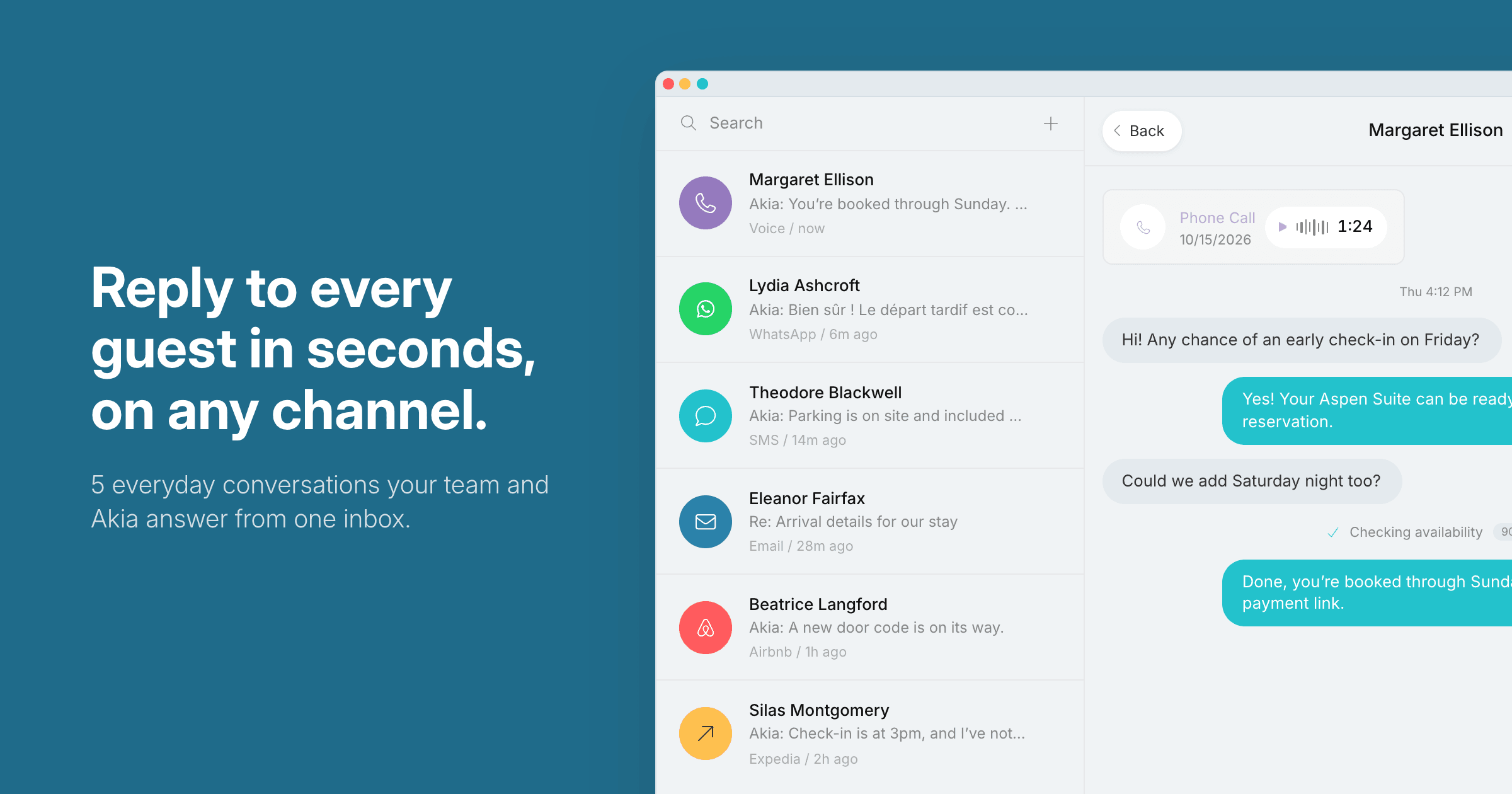
Akia captures real contact info from OTA guests automatically. During digital check-in, Akia requires an email address regardless of booking source, so an Airbnb or Vrbo reservation stops being an anonymous booking and becomes a real, addressable guest record.
Akia builds one profile per guest across every channel. PMS data, messaging, web chat, sign-up forms, and booking history all feed the same record. A guest who booked through Expedia on one stay and texts the front desk on the next is recognized as one person, not two disconnected entries.
Akia ties every campaign back to the reservation it produced. Email and SMS sends are attributed directly to bookings, so an operator can see exactly which OTA-sourced guests converted to a direct stay and how much revenue that campaign generated, split by direct versus OTA.
Akia filters and rewards based on booking behavior. Guests with upcoming reservations can be excluded from win-back offers automatically, and properties can configure direct-booking perks, like the waived early check-in fees Ski Country Resorts uses, without building custom logic by hand.
"It has also been a nice way to regain some of those commissions we pay to third parties. The way you can customize so many aspects of reservation has made our life so much easier. I can't imagine how we'd be functioning if we had not set up this automation."
— Shannon Sinnard, Sales & Marketing Director, Ski Country Resorts
Ski Country Resorts, a 160-unit vacation rental company in Breckenridge, Colorado, used Akia's integration with Escapia to waive early check-in fees for direct bookers and automate payment collection, generating 2x extra revenue and regaining commission dollars previously lost to OTAs.
"Akia made tracking success so much easier. Because it ties directly into our booking system, we see exactly which guests booked from every campaign."
— Owen Wexman, Marketing Strategy Manager, Revival Hotels
Revival Hotels generated over $13,500 in post-stay revenue across two properties in under four months, with full visibility into which guests converted from OTA to direct through each campaign.
Getting started: three steps before you build anything.
1. Audit how many current bookings are OTA-sourced and whether you capture real contact info for them. If most OTA reservations have no usable email or phone number on file, that's the gap to close first, before spending on a booking website redesign.
2. Test one direct-booking incentive on your next batch of OTA arrivals. A waived fee, an early check-in perk, or a small discount, offered specifically to guests who switch to direct next time. Measure who takes it.
3. Confirm your system can tag booking source per guest. Before investing heavily in traffic or website work, make sure you can actually answer "how many of our repeat guests came from an OTA the first time and booked direct the second." Most operators can't answer that today, and it's the number that matters most.
Properties that convert OTA guests into direct bookers aren't necessarily getting more traffic. They're getting more out of guests they already earned. The email captured at check-in, the campaign that reaches the right guest at the right moment, and the perk that makes switching worth it all point toward the same outcome: a repeat guest who books direct instead of paying the toll a second time.
See how Akia converts OTA guests into direct bookers, or book a demo to see it running on your properties.