
When you're managing your first 10 units, you can get away with a lot. You know every property personally. You can answer every guest call yourself. You might have two or three arrivals that are manageable.
 ### Growth changes how you operate.
-
0–20 units: You can manage most communication yourself.
-
20–50 units: Volume increases and you start relying on staff. This is where miscommunication begins.
-
50+ units: Information spreads across tools and people, and consistency becomes hard to maintain.
Around 20 units, the tension starts.
At 20 units, you've got five or six arrivals on a Friday night. Guests are messaging from Airbnb, VRBO, and direct at the same time. Someone needs help with their door code at 11pm while someone else is asking about early check-in for tomorrow. You can't be everywhere, so you hire a reservations coordinator, maybe a VA for after-hours.
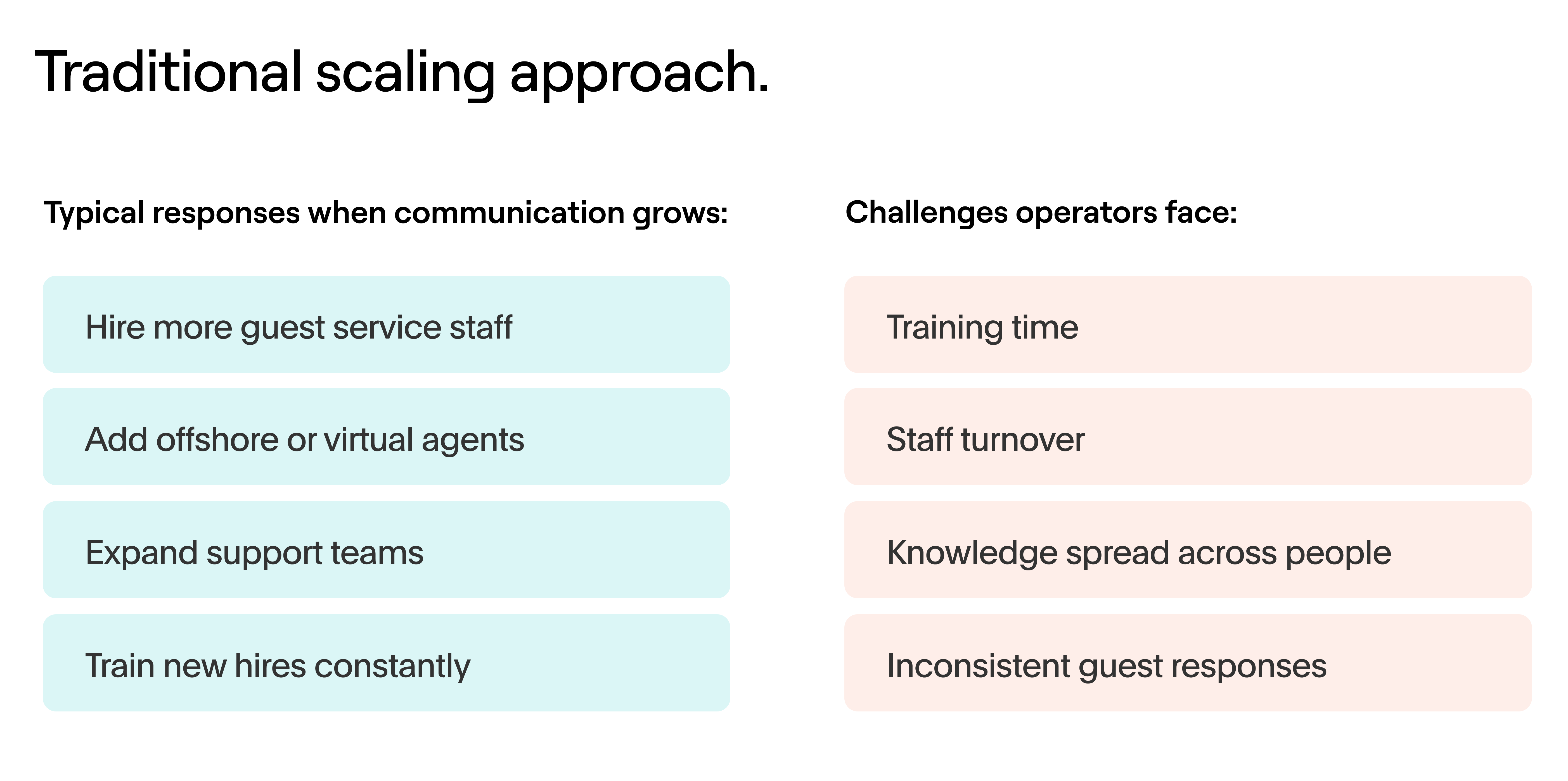
This works for a while. But now you have to get other people to operate the way you do, with the same knowledge you have, at the same level of consistency.
50 units is where informal systems break down.
A new coordinator misreads a cancellation policy and tells a guest they can get a refund on a non-refundable rate. A VA sends check-in instructions for the wrong property because the information was spread across a shared Drive, a Slack thread, etc.
What good infrastructure looks like for properties.
The operators who handle this stage well tend to do a few things early:
-
Centralize everything in one place. One place where every policy, property detail, and process lives, so anyone can find the same answer without asking someone else. This will be used as references across all staff.
-
Define what gets escalated. Ambiguity about who handles what is where things fall through.
Where AI fits in.
AI makes this infrastructure actually usable at scale.
Instead of relying on staff to remember policies or dig through documents, AI can reference your SOPs and property details instantly, and apply them at the point of communication.
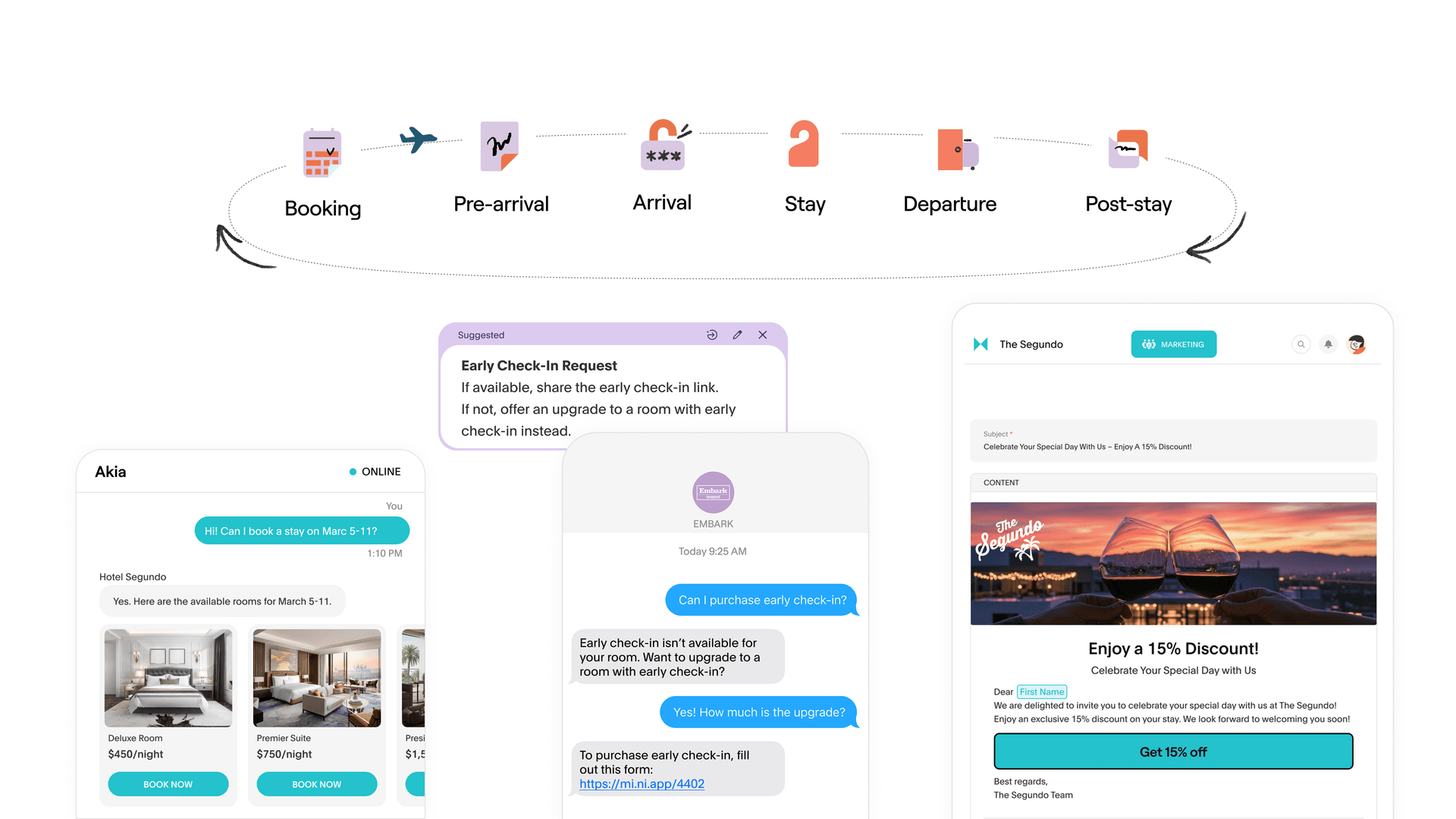
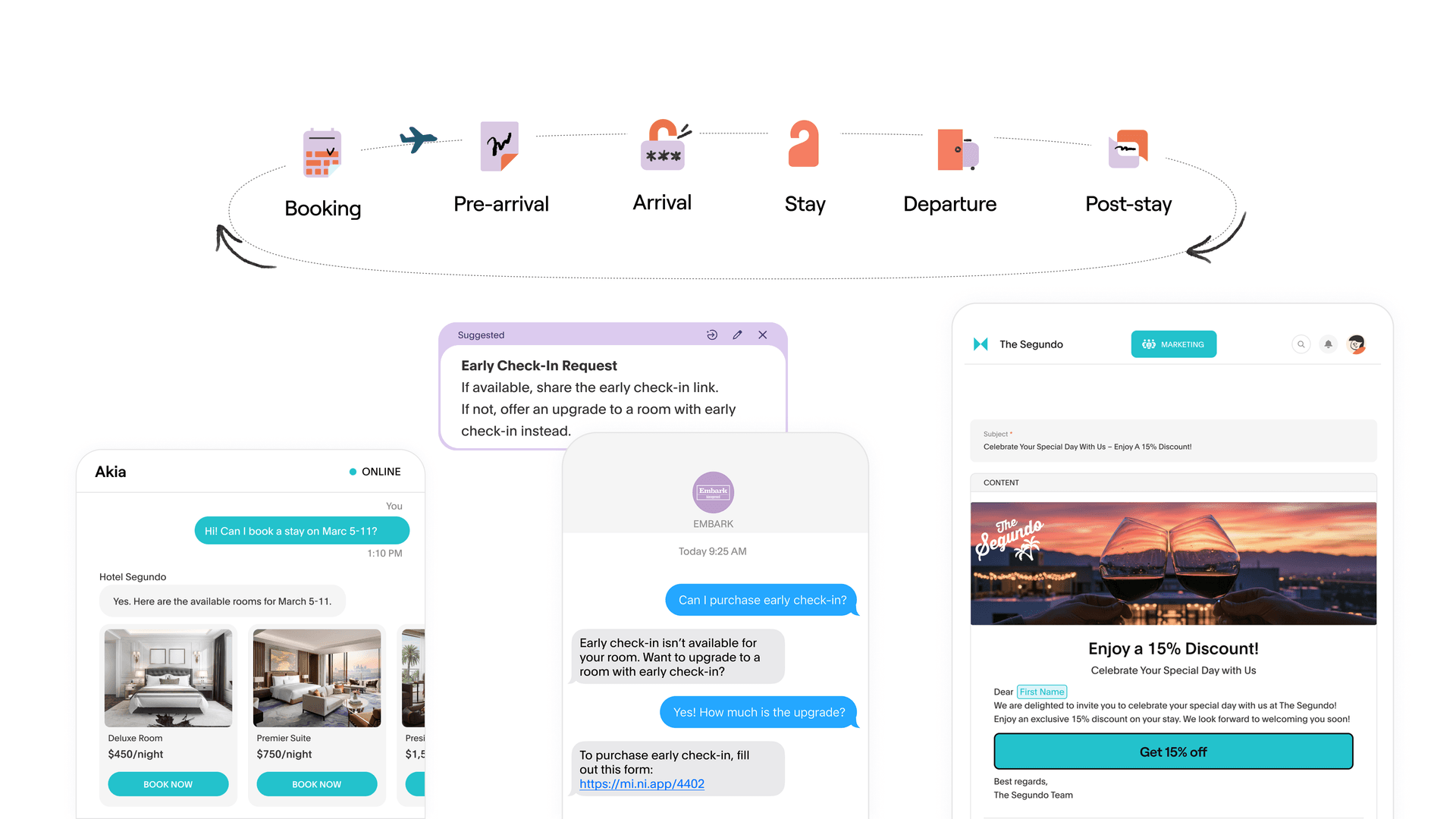
For example, it understands the difference between:
-
“When can I check in?”
-
“Is early check-in available?”
…and responds based on your actual rules, not a generic answer.
As message volume increases, AI handles repetitive questions automatically, while your team focuses on exceptions and higher-value interactions.