
Teams have that person. They know how to respond when a guest pushes back on a cancellation policy at 9pm on a Saturday. They know when arrival timing can flex and when it can’t. They know which situations need escalation and which can be resolved immediately.
That knowledge is incredibly valuable. It’s also incredibly fragile. Because the day that person leaves, it leaves with them.
What tribal knowledge actually costs you.
A guest gets a different answer depending on who responds. A new coordinator handles a request correctly, but without confidence. An after-hours message sits unanswered until morning because no one is available to respond.
In an industry with frequent staff turnover, this compounds quickly.
The fix: SOPs that reflect how your team actually operates.
Properties already have policies. What they’re missing is documentation for how those policies are applied in real situations.
Strong SOPs answer questions like:
-
What do we say when a guest arrives earlier than expected?
-
What alternatives do we offer if the unit isn’t ready yet?
-
When do we approve exceptions to cancellation rules?
-
When should a request be escalated instead of resolved immediately?
-
How do we respond when guests are unsure how to access the property?
Documenting the decisions your most experienced staff already make every day.
For example:
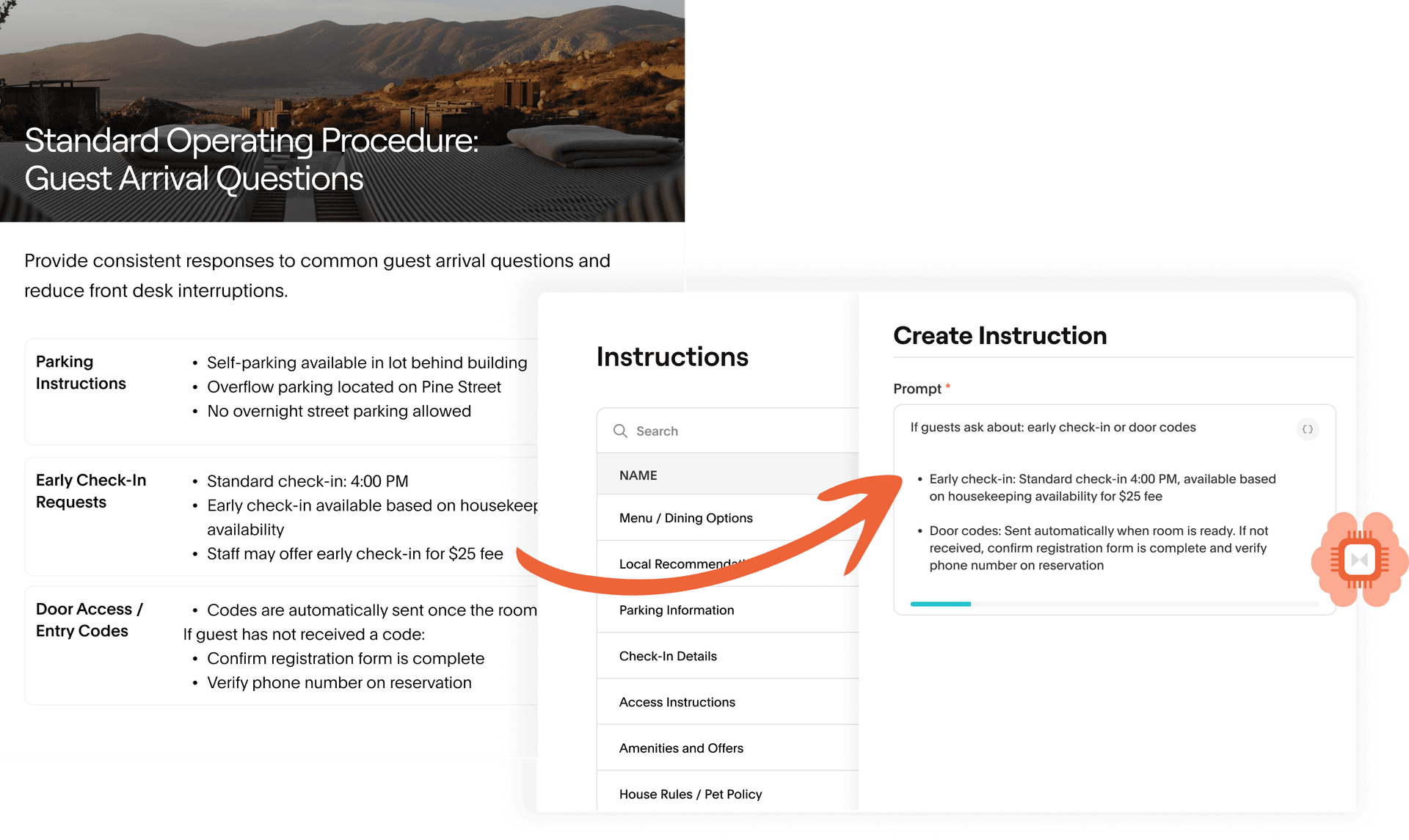
Instead of writing “Early arrivals depend on availability,” document: “If housekeeping confirms readiness, notify the guest immediately. If not ready, send an update as soon as access becomes available.”
This keeps it more clear and less assumptions for new team members.
Where systems help maintain consistency
Even strong SOPs only work if they’re easy to apply at the moment.
During busy arrival windows or after-hours support, staff don’t always have time to search documentation before replying. Guests still expect answers immediately.
Where AI makes SOPs usable in real conversations
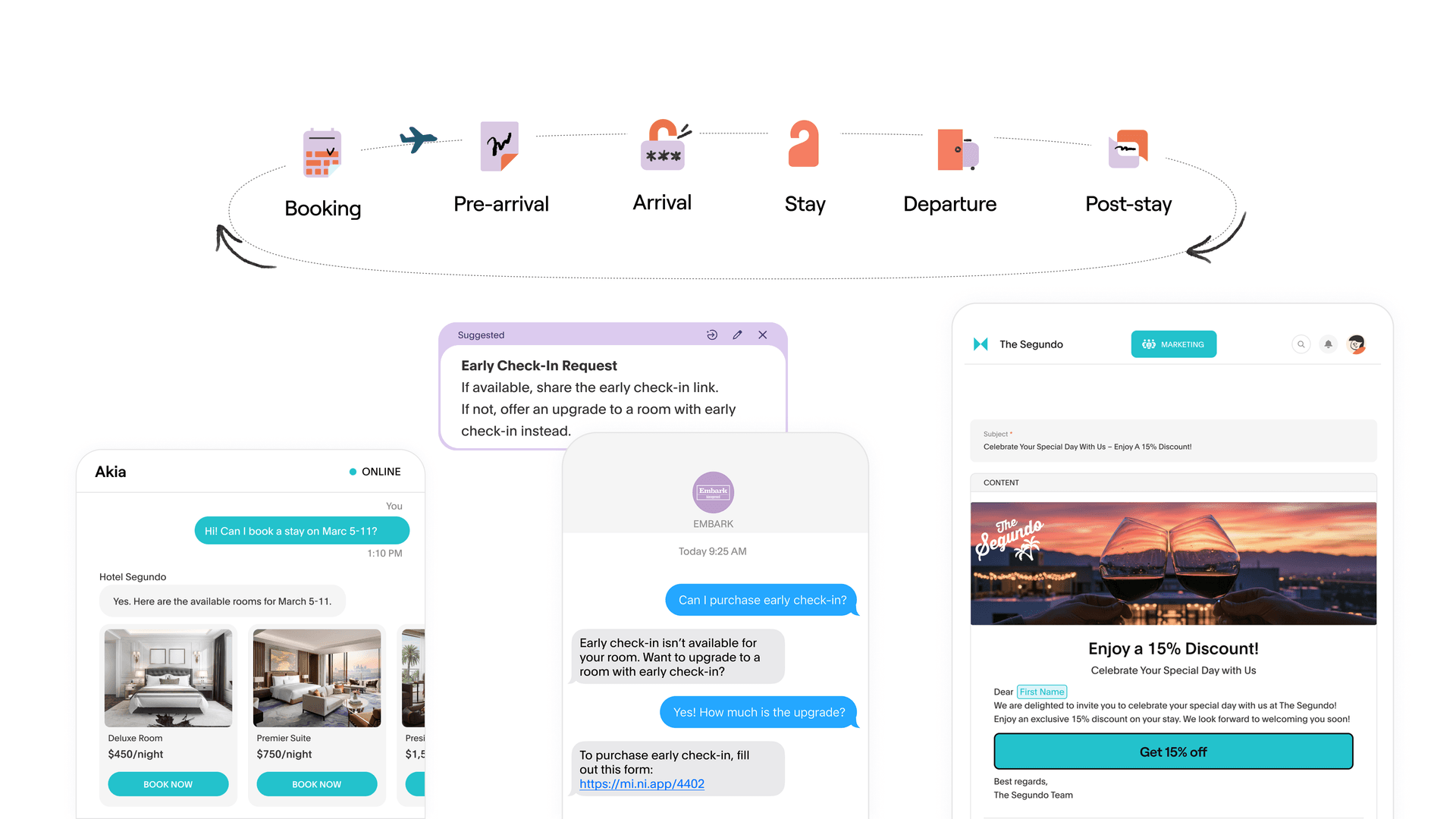
Instead of staff needing to search for the right response, systems like Akia’s AI Agents apply those documented policies automatically across guest conversations.
Krissy, Director of Operations at Bear Tootin shared:
“It’s great to have a system that can respond right away instead of guests arriving at 7pm and having to wait until the next morning for an answer.”
If you’re thinking about how teams actually train AI Agents on their SOPs, policies, and past guest responses, we covered that step-by-step in our article: Train it once. Let it work forever.
Start small
You don’t need a full operations manual to begin.
Start with the 10 situations your team answered this week. Document what the policy is, when exceptions apply, and how the response should sound.
As Krissy explained:
“We could actually train the AI agents to respond in a way that it is like us.”