The hotel staffing shortage isn't a temporary hiring problem. It's a structural one, and the numbers are catching up faster than most operators expected. Sixty-five percent of hotel owners named labor costs their top business pressure in 2026. The industry faces a projected 8.6 million worker shortfall by 2035. And right now, more than one in four hotels are running their front desks below sustainable staffing levels on a regular basis.
Properties still treating this as a "we just need to hire more people" problem are solving for the wrong constraint. The ones pulling ahead are asking a different question: what does the front desk actually need to be?
Why the shortage keeps getting worse.
The hospitality labor market hasn't recovered evenly since 2020, and in many markets, it hasn't recovered at all. Wages are higher, but applicant pools are smaller, turnover remains elevated, and the training load on existing staff keeps compounding.
The structural driver is generational. Hospitality has struggled to replace an older workforce exiting the industry with younger workers who have more alternatives, shorter tenures, and different expectations for what work looks like. Customer-facing shift work is one of the harder roles to fill and retain.
Meanwhile, guest contact volume hasn't dropped. If anything, it's increased. Guests message more than they call, ask more pre-arrival questions, and expect faster responses than a stretched team can reliably deliver.
What front desk automation actually handles.
The instinct to resist automation usually comes from a misread of what it does. It doesn't replace hospitality. It absorbs volume.
The category of tasks that genuinely requires a trained, present human is narrower than most teams assume. Handling a distressed guest. Resolving a complex service failure. Delivering the personal moment that earns a five-star review. Those need people.
What doesn't: answering "what time is checkout" for the forty-third time this week. Sending check-in instructions. Collecting a signed rental agreement. Processing a credit card authorization. Routing a housekeeping request. Responding to a 2am WiFi question.
That's what front desk automation handles, and at most properties, it represents the majority of daily contact volume.
The ROI case is no longer speculative.
Hotel automation ROI used to be hard to quantify because deployments were narrow: one chatbot for FAQs, one tool for digital check-in. Time savings were real but fragmented.
What's changed is scope. Properties deploying full guest journey automation, covering pre-arrival, check-in, in-stay messaging, and post-stay follow-up through a unified system, are seeing measurable impact on labor cost, review scores, and revenue.
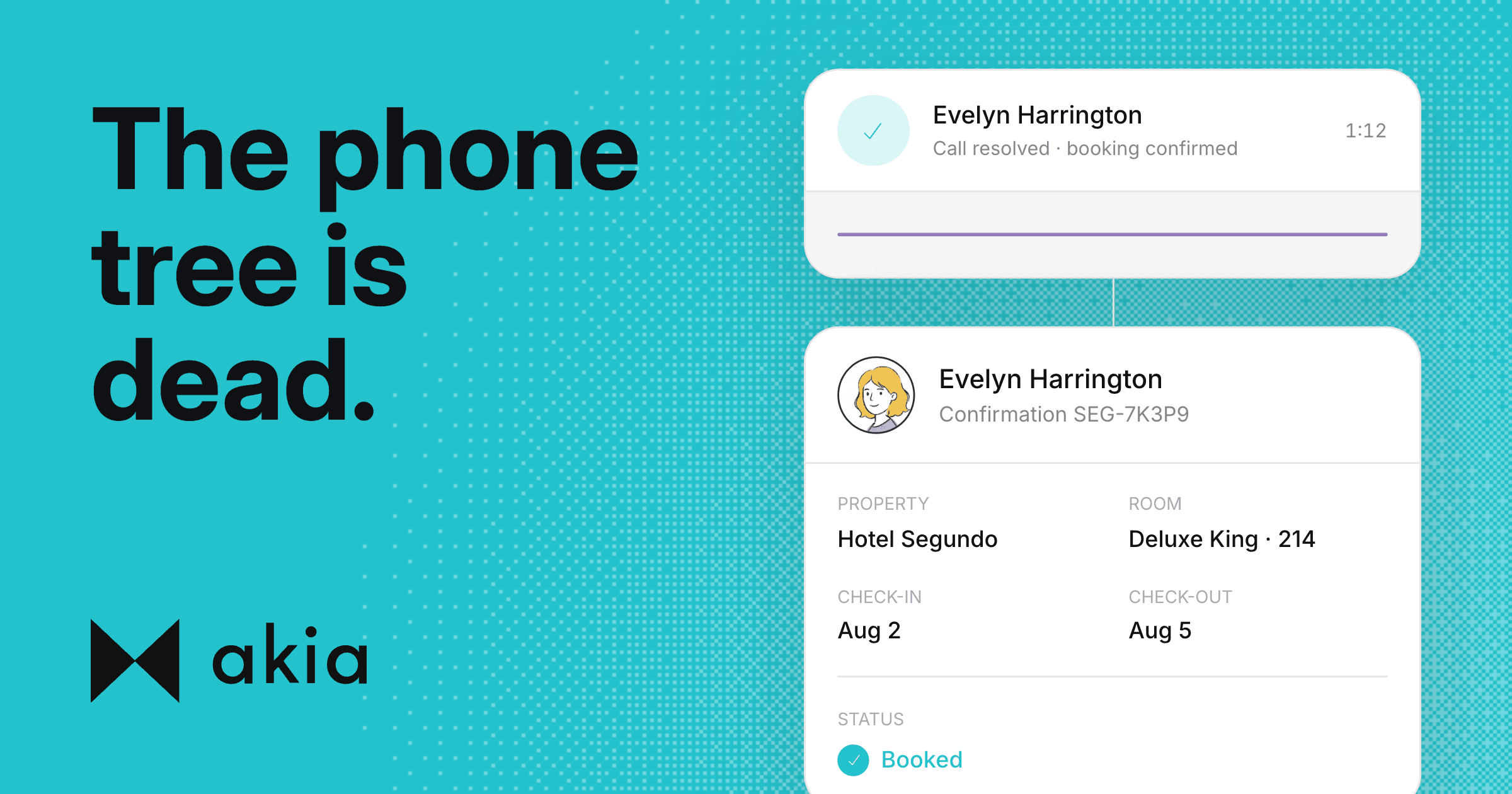
Revival Hotels automated their entire guest communication workflow using Akia's AI agents, (see hotel automation for what else can run this way) reducing front desk call volume and freeing their team to shift from reactive inquiry-handling to proactive guest service. The result: a 50% reduction in variable operating costs, with the same team, not a smaller one. Phone volume is usually the last channel a short-staffed desk gets control of, and it does not require replacing the hotel phone system already on the property. See how hotels run on Akia.
That framing matters. The strongest ROI case isn't headcount reduction. It's workload absorption: letting a team that can't grow do more, without burning out the people you have.
Where to start if you're short-staffed now.
If your property is operating below ideal staffing levels today, automation isn't a future investment. It's immediate triage.
Start with the highest-volume, most repeatable contact points: check-in instructions, pre-arrival FAQs, and post-stay review requests. These three sequences alone can eliminate a significant portion of daily handling time and are deployable in days, not months.
Then look at what's driving reactive inbound volume during your hardest-to-staff hours. A guest messaging at midnight about a noisy neighbor doesn't need a human to acknowledge them. They need a fast response and a follow-up. That's a workflow automation handles well.
The staffing shortage isn't going away by 2027 or 2030. Properties building automation into their operating model now, not as a contingency but as a deliberate structure, will be better positioned when the 8.6 million worker gap arrives in full. The front desk of the future has fewer repetitive tasks and more meaningful ones. Getting there requires deciding the current model isn't the only one.